
“You’ve got to try this miso ramen,” my friend said with a grin, sliding the steaming bowl across the table. It was one of those rare nights when the usual takeout just didn’t cut it, and honestly, I was skeptical—miso, spicy, creamy all in one? But that first slurp changed everything. The broth hit me like a warm, savory hug with a cheeky kick of heat, and the perfectly soft boiled egg nestled on top was like the cherry on a very delicious sundae. That night, I realized that making Flavorful Creamy Spicy Miso Ramen with Soft Boiled Egg & Chashu Pork at home wasn’t just possible—it was downright addictive.
Since then, I’ve made this ramen multiple times in a single week, tweaking the spice level and slow-simmering the chashu pork until it melts off the bone. It’s become my go-to comfort bowl when I want something that feels special but doesn’t take all day. The creamy miso broth, spicy notes, and tender pork all come together in a way that’s both soul-soothing and exciting for the palate. Plus, that soft boiled egg? It’s just the right touch of silky richness that makes every bite worth savoring.
What’s stuck with me is how this recipe feels like a reward after a long day—something you crave but can create in your own kitchen without fuss. It’s not just ramen; it’s an experience, a little moment of joy in a bowl that keeps calling me back.
Why You’ll Love This Recipe
This Flavorful Creamy Spicy Miso Ramen with Soft Boiled Egg & Chashu Pork hits all the right notes, and here’s why it’s become a favorite in my kitchen:
- Quick & Easy: The broth simmers while you prep the pork and eggs, coming together in about 45 minutes—perfect for busy evenings when you want restaurant-quality ramen without the wait.
- Simple Ingredients: You’ll find most of these in your pantry or local grocery, no obscure imports needed. Plus, the chashu pork is made with basic pork belly and seasonings, nothing fancy.
- Perfect for Cozy Dinners: The creamy, spicy broth warms you right up on chilly nights or whenever you want a bowl that feels like a hug.
- Crowd-Pleaser: I’ve served this to guests who aren’t usually ramen fans, and it’s always a hit. Kids love the soft boiled egg, and adults appreciate the balance of spice and creaminess.
- Unbelievably Delicious: The combination of miso’s earthiness, the gentle heat, and the melt-in-your-mouth pork makes each spoonful crave-worthy.
What sets this recipe apart is the way the broth stays creamy without heavy cream—thanks to a slow infusion of miso and a bit of toasted sesame oil. The spicy kick isn’t overwhelming but just enough to make you sit up and take notice. Also, slow-cooking the chashu pork in a soy-based marinade gives it that tender, flavorful depth that you won’t find in regular pork toppings. Honestly, if you’re looking for ramen that feels homemade yet special, this is the one to bookmark.
For a fun twist on creamy textures, I sometimes pair this ramen night with my creamy deviled eggs recipe, which has a smooth, herbaceous filling that contrasts nicely with the spicy broth. It’s all about balancing rich, comforting flavors without overdoing it.
What Ingredients You Will Need
This ramen recipe relies on straightforward, wholesome ingredients that pack a punch in flavor and texture. Most are pantry staples, and a few fresh items bring everything to life.
- Pork Belly (chashu pork): About 1 lb (450 g), skin removed for easy slicing. Look for well-marbled meat for tenderness.
- Soft Boiled Eggs: 4 large eggs, room temperature. The yolks should be just slightly runny.
- Miso Paste: 3 tablespoons (preferably red or a blend of red and white for depth). I recommend Marukome for authentic flavor.
- Chicken Broth: 6 cups (1.4 liters), low sodium to control saltiness.
- Sesame Oil: 2 tablespoons, toasted sesame oil adds that nutty, creamy aroma.
- Soy Sauce: 1/4 cup (60 ml), use a naturally brewed soy sauce like Kikkoman for rich umami.
- Mirin: 2 tablespoons, for subtle sweetness and balance.
- Garlic: 3 cloves, minced.
- Ginger: 1 tablespoon, freshly grated.
- Chili Paste or Sriracha: 1-2 teaspoons, adjust to your heat preference.
- Ramen Noodles: 4 servings, fresh if possible but dried works too.
- Green Onions: 2 stalks, thinly sliced for garnish.
- Optional Toppings: Nori sheets, bamboo shoots, corn, or bean sprouts for extra texture.
For a gluten-free option, you can swap regular soy sauce with tamari and use gluten-free ramen noodles. If you’re avoiding pork, chicken thighs slow-cooked in the same marinade make a tasty alternative.
If you want to try a vegetarian version, consider replacing the pork with smoked tofu and using mushroom broth to keep that deep umami flavor alive.
Equipment Needed
- Large Pot or Dutch Oven: For simmering the broth and cooking the chashu pork.
- Medium Saucepan: To boil the eggs precisely.
- Fine Mesh Strainer: Optional, for clarifying broth if needed.
- Slotted Spoon: To carefully remove soft boiled eggs from hot water.
- Kitchen Thermometer: Helpful to check pork doneness and ensure eggs are cooked just right.
- Sharp Knife and Cutting Board: For slicing pork and chopping garnishes.
- Ramen Bowls and Chopsticks: For serving with style.
If you don’t have a Dutch oven, a heavy-bottomed pot works well to maintain even heat. For soft boiled eggs, I prefer using a saucepan with a lid to control the cooking environment better.
Investing in a good set of ramen bowls really enhances the experience. They hold heat well and give that authentic feel when you serve your creamy spicy miso ramen.
Preparation Method
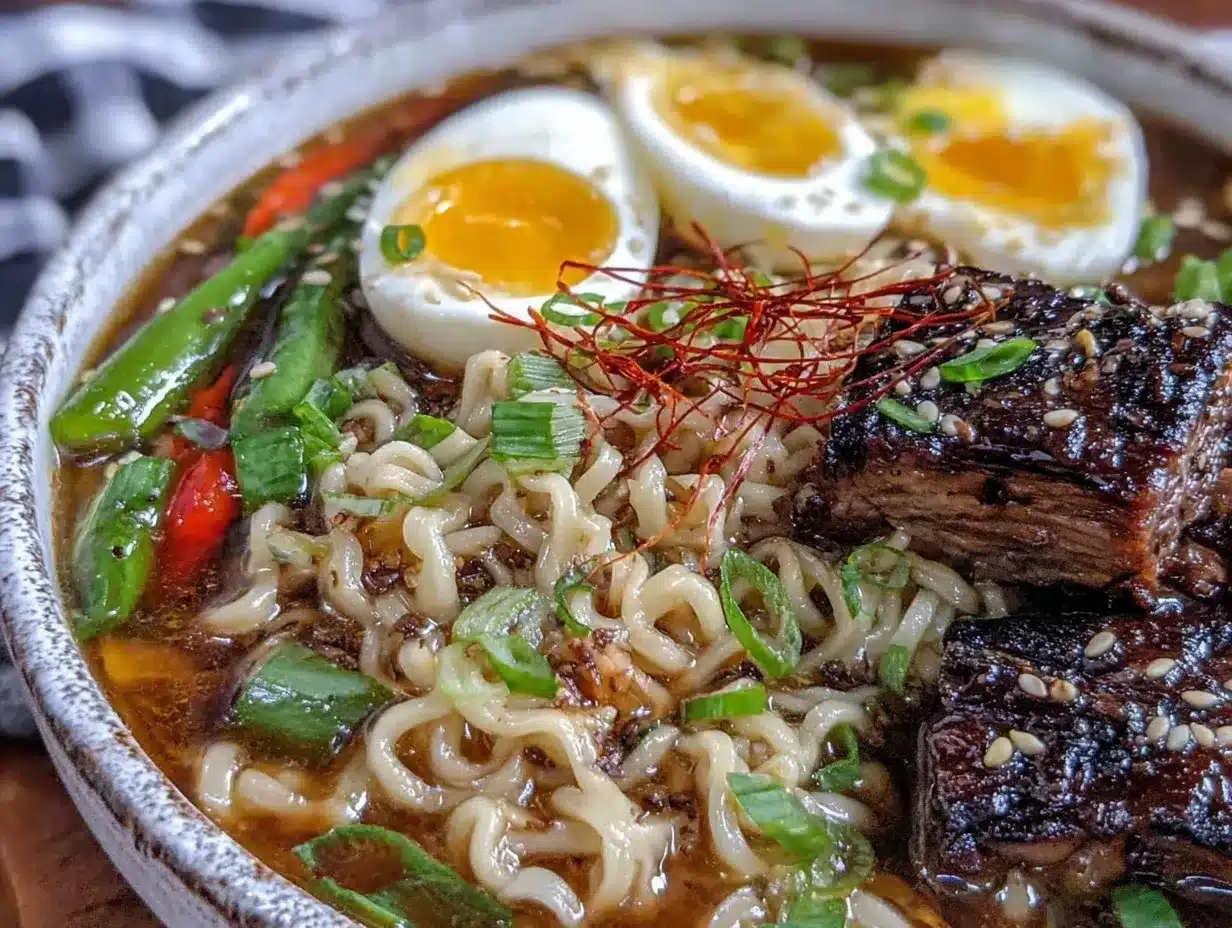
- Prepare the Chashu Pork:
- Roll the pork belly into a tight log and tie it with kitchen twine.
- In your large pot, combine soy sauce (60 ml), mirin (30 ml), 1 tablespoon sugar, minced garlic, grated ginger, and 1 cup (240 ml) water. Bring to a boil.
- Add the pork belly, reduce heat to low, and simmer covered for 1 hour, turning occasionally. The pork should be tender but not falling apart.
- Remove pork, let cool slightly, then slice into 1/4 inch (0.6 cm) thick pieces. Reserve the braising liquid for broth flavor.
- Make the Broth:
- In the same pot, add chicken broth (1.4 liters), reserved pork braising liquid, miso paste, toasted sesame oil, chili paste, and stir to combine.
- Simmer gently for 20 minutes to meld flavors. Taste and adjust seasoning with soy sauce or chili paste if needed.
- Cook Soft Boiled Eggs:
- Bring water to a boil in a separate saucepan. Gently lower eggs into boiling water and cook for exactly 6 minutes.
- Immediately transfer eggs to an ice bath to stop cooking. Peel carefully once cool.
- Cook Ramen Noodles:
- Boil noodles according to package instructions, usually 3-4 minutes for fresh, 5-6 for dried.
- Drain and rinse briefly under warm water to remove excess starch.
- Assemble the Bowls:
- Divide noodles into bowls. Ladle hot miso broth over noodles.
- Top with sliced chashu pork, halved soft boiled eggs, and garnish with sliced green onions and optional nori or bamboo shoots.
Tip: To keep the broth creamy and smooth, stir miso paste into a small amount of warm broth first before adding it back to the pot. This avoids clumps and helps distribute flavor evenly.
Watch the pork carefully while braising—if the liquid evaporates too much, add a splash of water to keep it moist. The pork should be tender enough to slice easily but still hold its shape.
Cooking Tips & Techniques
When making this creamy spicy miso ramen, a few tricks help get it just right every time:
- Soft Boiled Eggs: Timing is everything. Exactly 6 minutes in boiling water gives that perfect, jammy yolk. Cooling immediately in ice water stops cooking and makes peeling easier.
- Miso Integration: Never boil miso directly—it kills the probiotics and can turn bitter. Stir it into warm broth off the heat or simmer gently after adding.
- Chashu Pork: Rolling and tying the pork belly ensures even cooking and a nice presentation. If you’re short on time, thinly sliced pork belly quickly pan-seared can work as a shortcut.
- Spice Balance: Adjust chili paste gradually. Start mild—you can always add more heat at the table with extra chili oil or flakes.
- Multitasking: While the broth simmers, prep the pork and boil eggs simultaneously to save time.
From experience, I learned that a dull knife makes slicing chashu frustrating and messy; a sharp blade gives clean slices that look as good as they taste. Also, resting the pork after braising lets the juices redistribute, so don’t rush into slicing.
Lastly, don’t skip the garnishes—they add freshness and texture that balance the rich broth perfectly.
Variations & Adaptations
This ramen recipe is surprisingly flexible, so you can tweak it to suit your preferences or dietary needs:
- Vegetarian Version: Use a rich mushroom broth and smoked tofu instead of pork. Add extra veggies like corn and bamboo shoots to bulk it up.
- Low-Spice Option: Omit chili paste and add a drizzle of chili oil individually at serving for those who want mild but with an option for heat.
- Gluten-Free: Swap regular soy sauce for tamari and choose gluten-free ramen noodles or spiralized zucchini for a low-carb twist.
- Extra Creamy: Stir in a spoonful of coconut milk or unsweetened soy milk for a dairy-free creamy boost.
- Chashu Shortcut: Use pre-cooked pork belly from a trusted source or pan-fry thin slices with garlic and soy for a quicker topping.
One personal favorite variation is adding a splash of lemon juice to the broth at the end—it brightens the flavors beautifully and cuts through richness.
Serving & Storage Suggestions
Serve this ramen hot, straight from the pot, in deep bowls to hold all that luscious broth and toppings. Garnish with fresh green onions and a few sheets of nori for an authentic touch.
Pair your bowl with a crisp cucumber salad or a side like cucumber avocado salad to add refreshing contrast.
Leftovers keep well in the fridge for up to 3 days. Store broth separately from noodles to prevent sogginess. Reheat broth gently on the stove, then add freshly cooked noodles before serving.
A tip: soft boiled eggs don’t reheat well, so peel and slice just before serving, or keep extras chilled and add cold for a textural contrast.
Flavors actually deepen after a day as the miso and pork meld together, so making the broth in advance is a great move.
Nutritional Information & Benefits
This ramen packs satisfying nutrition without feeling heavy. Per serving, you can expect roughly:
| Calories | 550-650 |
|---|---|
| Protein | 35g |
| Fat | 25g |
| Carbohydrates | 45g |
| Fiber | 3g |
Miso is a fermented food rich in probiotics that can aid digestion, while ginger and garlic have anti-inflammatory benefits. Pork belly provides protein and essential amino acids, though it’s higher in fat, so balance with fresh sides.
This recipe can be adapted for gluten-free diets by choosing tamari and gluten-free noodles. Be mindful of soy allergies, as miso and soy sauce are key players here.
From a wellness standpoint, this ramen satisfies comfort food cravings in a way that’s nourishing and mindful, especially when paired with fresh veggies on the side.
Conclusion
Making Flavorful Creamy Spicy Miso Ramen with Soft Boiled Egg & Chashu Pork at home has been a game-changer for cozy dinners that feel like a treat. It’s a recipe that’s approachable yet impressive, with layers of flavor that keep you coming back for more.
The beauty lies in how you can adjust spice, toppings, and even broth richness to make it your own. I love this ramen because it fills the kitchen with irresistible aromas and ends with that satisfying slurp of broth and noodles. It’s become a staple when I want something that’s both comforting and exciting, a little bowl of happiness.
If you try it, I’d love to hear how you made it yours—drop a comment or share your tweaks. Happy cooking and even happier eating!
FAQs
How do I get the perfect soft boiled egg for ramen?
Cook eggs in boiling water for exactly 6 minutes, then immediately transfer to an ice bath. This yields a tender white with a slightly runny yolk perfect for ramen.
Can I make the broth ahead of time?
Yes! The broth can be made up to 2 days in advance and stored in the fridge. Reheat gently before serving.
What’s the best cut of pork for chashu?
Pork belly is ideal for its fat content and tenderness. If unavailable, pork shoulder works but may be less silky.
How spicy is this ramen? Can I adjust the heat?
The spice level is moderate, thanks to chili paste. You can reduce or omit it entirely, then add chili oil at the table for personalized heat.
Are there any good vegetarian substitutions?
Use a mushroom-based broth and smoked tofu in place of pork. Add hearty veggies and miso for umami richness.
Pin This Recipe!
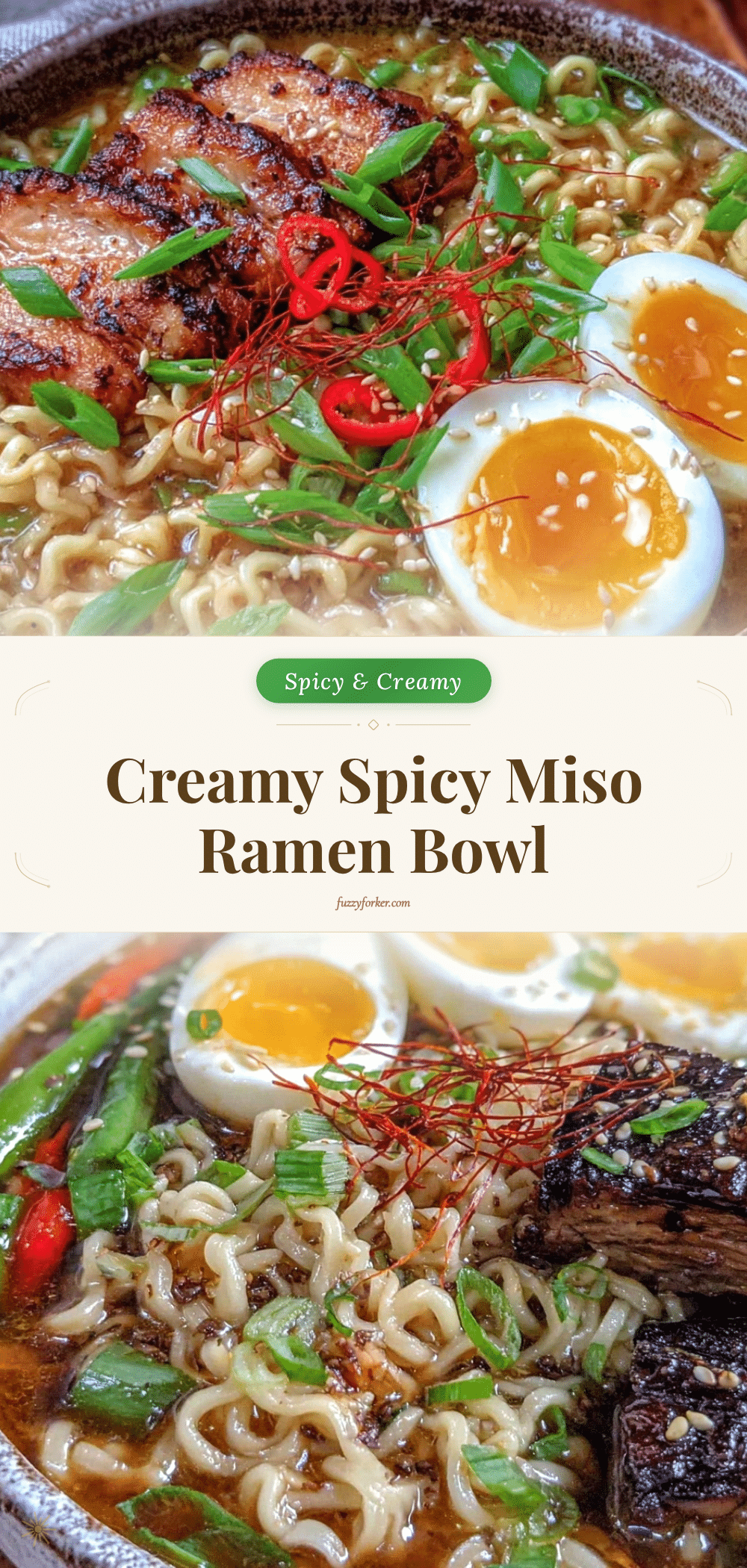
Flavorful Creamy Spicy Miso Ramen Recipe with Soft Boiled Egg and Chashu Pork

A comforting and addictive ramen recipe featuring a creamy, spicy miso broth, tender chashu pork, and perfectly soft boiled eggs. Ready in about 45 minutes, it’s perfect for cozy dinners and customizable to your spice preference.
- Prep Time: 15 minutes
- Cook Time: 30 minutes
- Total Time: 45 minutes
- Yield: 4 servings 1x
- Category: Main Course
- Cuisine: Japanese
Ingredients
- 1 lb pork belly (chashu pork), skin removed
- 4 large eggs, room temperature
- 3 tablespoons miso paste (red or blend of red and white)
- 6 cups low sodium chicken broth
- 2 tablespoons toasted sesame oil
- 1/4 cup soy sauce (60 ml), naturally brewed
- 2 tablespoons mirin
- 3 cloves garlic, minced
- 1 tablespoon freshly grated ginger
- 1–2 teaspoons chili paste or sriracha (adjust to heat preference)
- 4 servings ramen noodles (fresh or dried)
- 2 stalks green onions, thinly sliced
- Optional toppings: nori sheets, bamboo shoots, corn, bean sprouts
Instructions
- Prepare the chashu pork: Roll pork belly into a tight log and tie with kitchen twine.
- In a large pot, combine soy sauce (60 ml), mirin (30 ml), 1 tablespoon sugar, minced garlic, grated ginger, and 1 cup (240 ml) water. Bring to a boil.
- Add pork belly, reduce heat to low, and simmer covered for 1 hour, turning occasionally until tender but not falling apart.
- Remove pork, let cool slightly, then slice into 1/4 inch (0.6 cm) thick pieces. Reserve braising liquid.
- Make the broth: In the same pot, add chicken broth, reserved pork braising liquid, miso paste, toasted sesame oil, and chili paste. Stir to combine.
- Simmer gently for 20 minutes to meld flavors. Taste and adjust seasoning with soy sauce or chili paste if needed.
- Cook soft boiled eggs: Bring water to a boil in a separate saucepan. Gently lower eggs into boiling water and cook for exactly 6 minutes.
- Immediately transfer eggs to an ice bath to stop cooking. Peel carefully once cool.
- Cook ramen noodles according to package instructions (3-4 minutes fresh, 5-6 minutes dried). Drain and rinse briefly under warm water.
- Assemble bowls: Divide noodles into bowls. Ladle hot miso broth over noodles.
- Top with sliced chashu pork, halved soft boiled eggs, sliced green onions, and optional toppings like nori or bamboo shoots.
Notes
To keep broth creamy and smooth, stir miso paste into a small amount of warm broth before adding to pot to avoid clumps. Watch pork while braising and add water if liquid evaporates too much. Use a sharp knife for clean pork slices. Soft boiled eggs should be cooked exactly 6 minutes and cooled immediately in ice water for perfect texture. Adjust chili paste gradually to control spice level. Broth can be made up to 2 days ahead and stored in fridge.
Nutrition
- Serving Size: 1 bowl (approximatel
- Calories: 600
- Sugar: 4
- Sodium: 900
- Fat: 25
- Saturated Fat: 8
- Carbohydrates: 45
- Fiber: 3
- Protein: 35
Keywords: miso ramen, spicy ramen, creamy ramen, chashu pork, soft boiled egg, homemade ramen, Japanese soup, comfort food