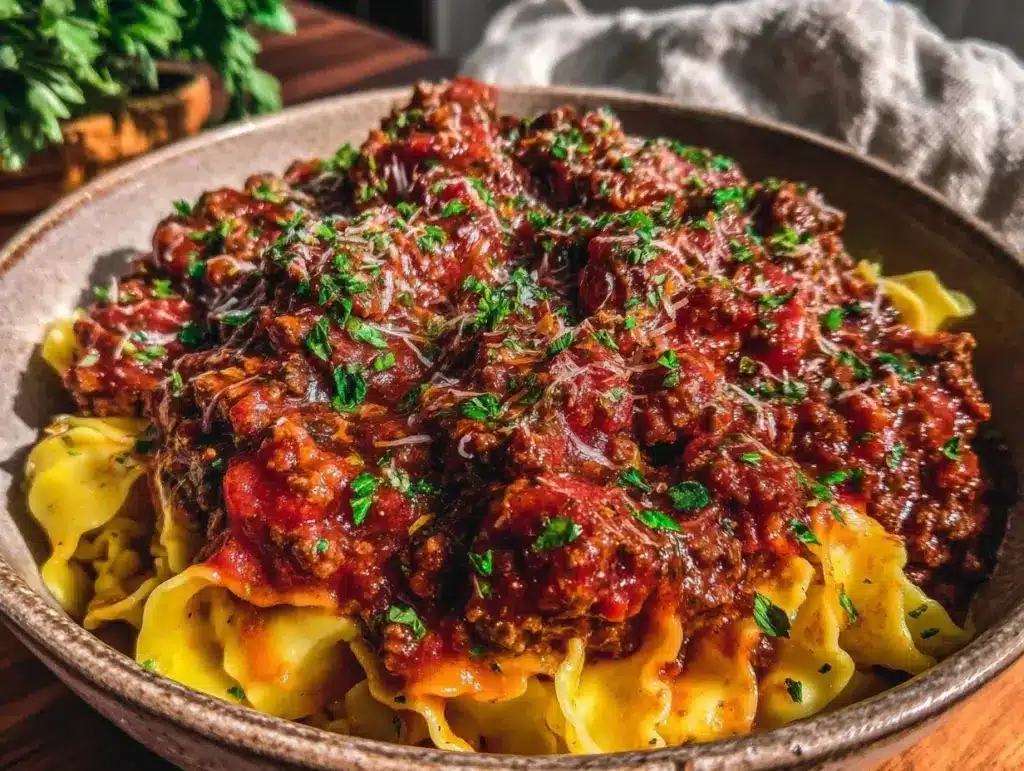
“Hey, can you bring over that ragu? Your weekend sauce is unbeatable,” my neighbor texted me last Saturday afternoon. Funny thing is, that ragu started out as a bit of a kitchen rescue mission. I was staring down a fridge full of odds and ends—some ground beef, leftover carrots, a lonely celery stalk—and honestly, I wasn’t in the mood to fuss. So, I tossed everything into a pot without much hope and let it simmer away while I tackled a mountain of emails. The next thing I knew, a rich, fragrant sauce was filling the kitchen, coaxing me from my screen with its cozy, earthy aroma. It wasn’t fancy. It wasn’t rushed. But it was exactly the kind of slow-cooked comfort food that felt like a warm hug after a long week.
That first accidental batch of my Classic Weekend Ragu Bolognese stuck with me. I found myself making it over and over, tweaking the seasoning here, adding a splash of wine there, but never straying too far from that original, slow-simmered base. There’s something so satisfying about the way the flavors deepen and meld together over hours—the tomatoes soften into a velvety backdrop, the meat turns tender and juicy, and the aromatics release their sweet, mellow notes. Honestly, it feels like the kind of recipe that rewards patience in the best way possible.
Now, when the weekend rolls around, a pot of this ragu is almost a tradition. It’s a quiet moment of normalcy and indulgence, a reminder that good food doesn’t have to be complicated to be memorable. Plus, there’s the added bonus that it makes the whole house smell like an Italian trattoria, which is just a lovely way to spend a Saturday afternoon. Between stirring the pot and opening a bottle of red, I’m reminded why this classic weekend ragu bolognese with slow-simmered richness has become one of those recipes I trust to bring people together and satisfy even the pickiest eaters.”
Why You’ll Love This Recipe
After countless attempts and many family dinners later, this Classic Weekend Ragu Bolognese has earned a permanent spot in my recipe rotation. It’s not just any pasta sauce—it’s the kind of dish that invites you to slow down and enjoy the process as much as the final meal. Here’s why this recipe stands out:
- Slow-Simmered Depth: The hours-long simmer develops layers of flavor you just can’t rush. It’s that rich, hearty taste that only time can bring out.
- Simple Ingredients: You don’t need a trip to a specialty store. Ground beef, tomatoes, aromatics, and a few pantry staples come together beautifully.
- Perfect for Weekend Cooking: It’s designed for those lazy mornings or afternoons when you can afford to let the sauce bubble away and fill your home with amazing smells.
- Crowd-Pleaser: Whether for a family dinner or a small gathering, this ragu gets rave reviews—kids and adults alike.
- Comfort Food Classic: It’s the sauce that makes pasta feel like a celebration, indulgent and satisfying without being complicated.
What sets this apart from other bolognese recipes? It’s the balance of savory and sweet, the careful layering of flavors, and the slow simmer that lets everything melt together. Plus, I often add a splash of milk towards the end to soften the acidity and bring a silky finish that’s truly next level. It’s the kind of sauce that makes you pause mid-bite, close your eyes, and savor the moment.
And if you want to pair it with something special, it’s a perfect companion to a fresh green salad or some crusty bread. For a little inspiration, I sometimes serve it alongside the creamy deviled eggs with fresh herbs—a surprisingly delightful combo that guests keep asking about.
What Ingredients You Will Need
This recipe calls for straightforward ingredients that come together to create that slow-simmered richness you expect from an authentic ragu bolognese. Most of these are pantry staples or easy to find at any grocery store, which makes this an accessible weekend project. Here’s what you’ll gather:
- Ground beef (80/20 blend recommended): Provides the hearty base with just enough fat for flavor and moisture.
- Carrots, finely diced: Adds subtle sweetness and texture.
- Celery stalks, finely diced: For that classic soffritto flavor that forms the aromatic backbone.
- Yellow onion, finely chopped: Sweet and savory, it melts into the sauce beautifully.
- Garlic cloves, minced: For depth and a touch of pungency.
- Canned whole peeled tomatoes (28 oz/800 g): Crush by hand or with a spoon to give the sauce body and acidity. San Marzano tomatoes work wonders here if you can find them.
- Tomato paste (2 tbsp): Concentrates the tomato flavor and thickens the sauce.
- Dry white or red wine (1 cup/240 ml): Adds complexity; if you prefer no alcohol, a splash of beef broth works fine.
- Milk or heavy cream (½ cup/120 ml): Stirred in near the end to mellow acidity and add creaminess.
- Olive oil (2 tbsp): For sautéing and a touch of richness.
- Fresh thyme and bay leaf: Classic herbs that infuse subtle, earthy notes.
- Salt and freshly ground black pepper: To taste, bringing everything together.
Optional but recommended:
- Parmesan rind: Toss it in during simmering for extra umami (remove before serving).
- Nutmeg (a pinch): A secret trick I learned that adds warmth without overpowering.
If you’re looking for substitutions, swapping ground beef with ground turkey or a plant-based meat alternative can work, though the flavor will naturally shift. For a gluten-free option, serve over gluten-free pasta or creamy polenta. When fresh herbs aren’t available, dried herbs work fine—just reduce quantities to avoid bitterness.
Equipment Needed
- Heavy-bottomed Dutch oven or large pot: The best choice for even heat distribution and slow simmering. I personally prefer a 5-quart Dutch oven for this recipe.
- Wooden spoon or silicone spatula: For stirring without scratching your cookware.
- Chef’s knife and cutting board: To finely dice your soffritto ingredients.
- Measuring cups and spoons: For accurate portioning of liquids and seasonings.
- Ladle: Handy for serving and portion control.
If you don’t have a Dutch oven, a heavy skillet with a lid can work, but keep an eye on the sauce to prevent burning. I’ve tried this recipe on a stovetop slow cooker insert, which does a great job of keeping things at a low, steady heat (and frees up stove space for other dishes). For those on a budget, enameled cast iron options from trusted brands like Lodge offer durability without breaking the bank.
Preparation Method
- Prepare the soffritto: Heat 2 tablespoons of olive oil over medium heat in your Dutch oven. Add finely diced onions, carrots, and celery (about 1 cup each). Stir occasionally, cooking for 8-10 minutes until softened and fragrant but not browned.
- Add garlic: Stir in 3 minced garlic cloves and cook for another 1-2 minutes until aromatic, making sure not to burn the garlic.
- Brown the ground beef: Increase heat to medium-high and add 1 pound (450 g) of ground beef. Break it up with your spoon and cook until browned all over, about 6-8 minutes. Drain excess fat if needed, but leaving a little adds flavor.
- Deglaze with wine: Pour in 1 cup (240 ml) of dry white or red wine, scraping the bottom of the pot to lift any browned bits. Let it simmer for 3-4 minutes until slightly reduced.
- Add tomato components: Stir in 2 tablespoons tomato paste, cooking for 2 minutes to deepen flavor. Then add one 28-ounce (800 g) can of crushed whole peeled tomatoes (crush by hand or with a spoon). Mix well.
- Add herbs and seasoning: Toss in a fresh thyme sprig, 1 bay leaf, and a parmesan rind if using. Season with salt and pepper to taste. Add a pinch of nutmeg if desired.
- Simmer low and slow: Reduce heat to low and let the sauce simmer gently, uncovered or partially covered, for 2 to 3 hours. Stir every 20-30 minutes to prevent sticking. The sauce should thicken and develop a deep, rich color.
- Finish with milk: About 15 minutes before serving, stir in ½ cup (120 ml) of milk or heavy cream to soften acidity and add creaminess. Remove thyme, bay leaf, and parmesan rind before serving.
- Adjust seasoning: Taste and add more salt, pepper, or a pinch of sugar if the sauce is too acidic.
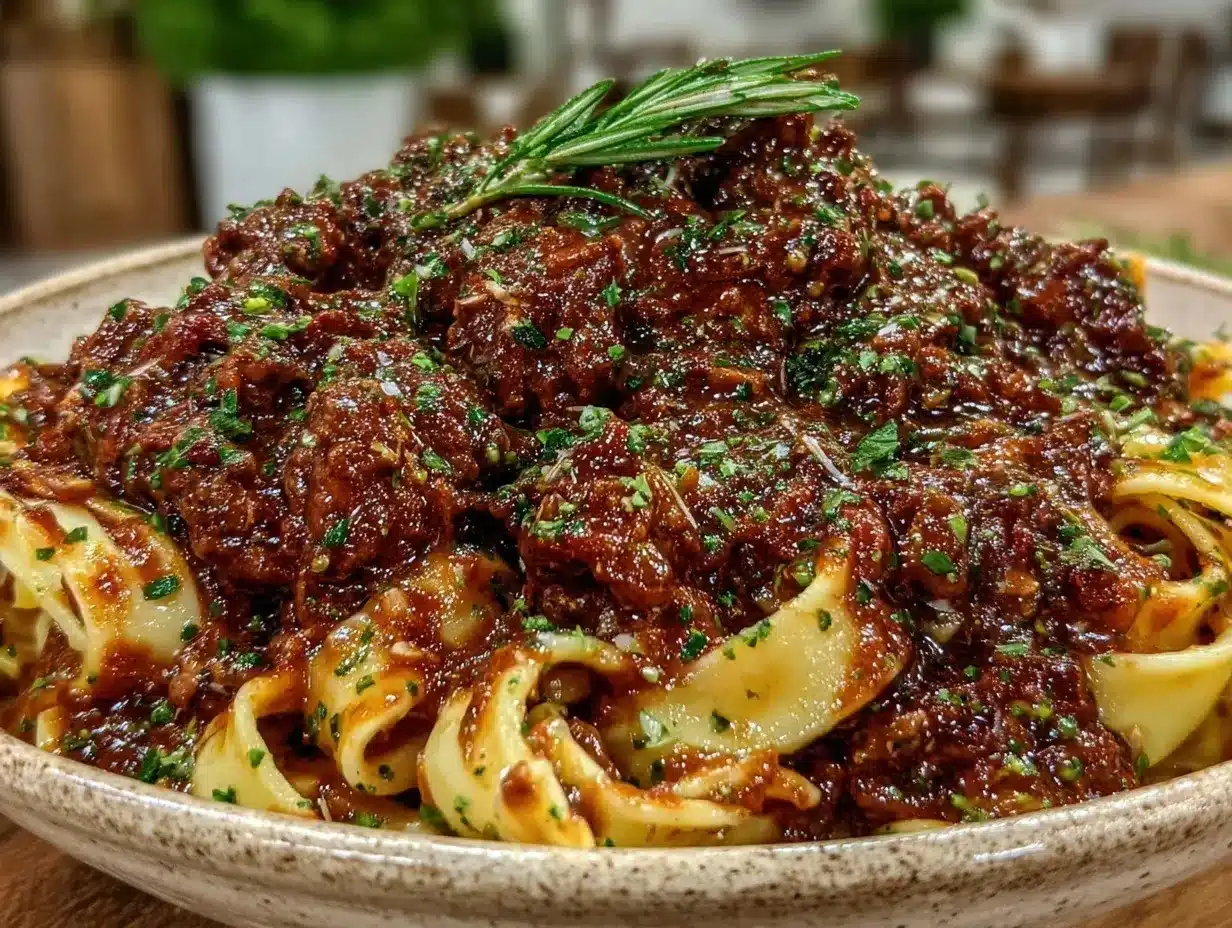
- Serve: Ladle over your favorite pasta—pappardelle, tagliatelle, or even spaghetti works beautifully—and top with freshly grated Parmesan and a sprinkle of chopped parsley.
Pro tip: If the sauce gets too thick, add a splash of broth or water during simmering to loosen it. The smell as it cooks is a reliable gauge—once it fills the room with that warm, tomatoey, herby aroma, you’re on the right track.
Cooking Tips & Techniques
For a ragu that really sings, a few little tricks can make all the difference. First, patience is key. Letting the sauce simmer low and slow allows all the flavors to marry fully. Resist the urge to rush this step; it’s worth every extra minute.
When browning the meat, don’t overcrowd the pot. Doing it in batches if necessary helps develop a nice crust, which adds that deep flavor you want. Also, stirring gently but frequently during simmering prevents the sauce from sticking or burning on the bottom.
Another tip is to crush the canned tomatoes by hand rather than using a blender. The slightly uneven texture adds rustic charm and a more authentic feel. Adding the milk or cream at the end is a traditional Italian technique that softens harsh tomato acidity and adds silkiness.
One mistake I made early on was skipping the wine or substituting too little. The wine’s acidity and flavor complexity are subtle but crucial. If you must omit it, beef broth plus a teaspoon of vinegar is a decent workaround.
Finally, multitasking is your friend here. While the sauce simmers, you can prepare a fresh salad or quick antipasto. I’ve found that pairing this ragu with the Italian marinated olives with fresh herbs is a lovely way to start the meal and keep guests nibbling happily.
Variations & Adaptations
This classic weekend ragu bolognese is wonderfully adaptable, so feel free to tweak it based on your mood, dietary needs, or what’s in the pantry:
- Vegetarian twist: Swap ground beef for finely chopped mushrooms and lentils. The mushrooms offer umami, and lentils add heft. Use vegetable broth and skip the milk or use a plant-based cream.
- Seasonal veggies: In autumn or winter, add diced butternut squash or parsnips with the soffritto for a slightly sweet undertone. In summer, fresh basil stirred in just before serving brightens the sauce.
- Spicy kick: Stir in red pepper flakes or a chopped fresh chili with the garlic for some heat.
- Slow cooker method: Brown meat and sauté veggies on stovetop, then transfer everything to a slow cooker and cook on low for 6-8 hours. Add milk near the end.
- Different proteins: Mixing ground pork or veal with beef adds richness and complexity. Or try a blend of beef and Italian sausage for more seasoning punch.
Personally, I once made a batch with ground turkey and added a splash of balsamic vinegar at the end. It was surprisingly satisfying and lighter but still had that rich, slow-cooked vibe.
Serving & Storage Suggestions
This ragu is best served warm and fresh over freshly cooked pasta. I like to toss the pasta with a bit of butter or olive oil before ladling on the sauce so the noodles don’t stick together. A generous grating of aged Parmesan on top is non-negotiable for me.
For sides, a crisp green salad with a bright vinaigrette balances the richness perfectly. Crusty bread or garlic bread is great for mopping up the sauce. If you want to keep the meal light, consider pairing it with the cucumber avocado salad with zesty lime dressing for a refreshing contrast.
Leftover ragu tastes even better the next day as the flavors continue to meld. Store cooled sauce in an airtight container in the refrigerator for up to 4 days, or freeze in portions for up to 3 months. To reheat, warm gently on the stovetop over low heat, adding a splash of water or broth if it feels too thick.
This sauce also freezes well in ice cube trays for easy, single-serving portions to add to other dishes like lasagna or baked ziti.
Nutritional Information & Benefits
While exact nutrition depends on portion size and specific ingredients, this classic ragu bolognese generally offers a well-balanced meal with protein, fiber, and essential vitamins. Ground beef provides a good source of iron and B vitamins, while the vegetables add fiber and antioxidants.
The slow cooking process helps break down the ingredients, making nutrients more bioavailable. Using olive oil adds heart-healthy fats, and the tomatoes contribute lycopene, a powerful antioxidant linked to several health benefits.
For those watching calories or fat, leaner ground meats or turkey can be used, and the milk can be swapped for plant-based alternatives. This dish is naturally gluten-free if served over gluten-free pasta or polenta, though it contains dairy and potential allergens like garlic and onion for sensitive individuals.
Conclusion
This Classic Weekend Ragu Bolognese with Slow-Simmered Richness isn’t just a recipe—it’s a weekend ritual that brings warmth, ease, and satisfaction to the table. It’s proof that simple ingredients and a little patience can transform into something truly special. I hope you’ll make it your own, experimenting with herbs, meats, or even the cooking method to suit your taste and lifestyle.
Personally, it’s become my go-to comfort sauce when I want something hearty but not fiddly, a dish that invites lingering conversations over a shared meal. If you try this recipe, I’d love to hear how you customize it or what you serve alongside it. Your feedback always means the world to me and helps this little kitchen corner grow.
So, get that pot simmering, pour yourself a glass of wine, and enjoy the slow magic of a true classic.
Frequently Asked Questions
How long should I simmer the ragu for the best flavor?
Simmering for 2 to 3 hours on low heat is ideal. This slow cooking allows flavors to deepen and the sauce to thicken beautifully.
Can I make the ragu ahead of time?
Absolutely! The flavors actually improve after resting overnight in the fridge. Just reheat gently before serving.
What pasta pairs best with this ragu?
Wide, flat noodles like pappardelle or tagliatelle hold the sauce well, but spaghetti or rigatoni also work great.
Is it okay to freeze leftover ragu?
Yes, ragu freezes very well. Cool completely, store in airtight containers or freezer bags, and use within 3 months.
Can I use ground pork or sausage instead of beef?
Definitely! Mixing ground beef with pork or Italian sausage adds richness and complexity to the sauce.
Pin This Recipe!
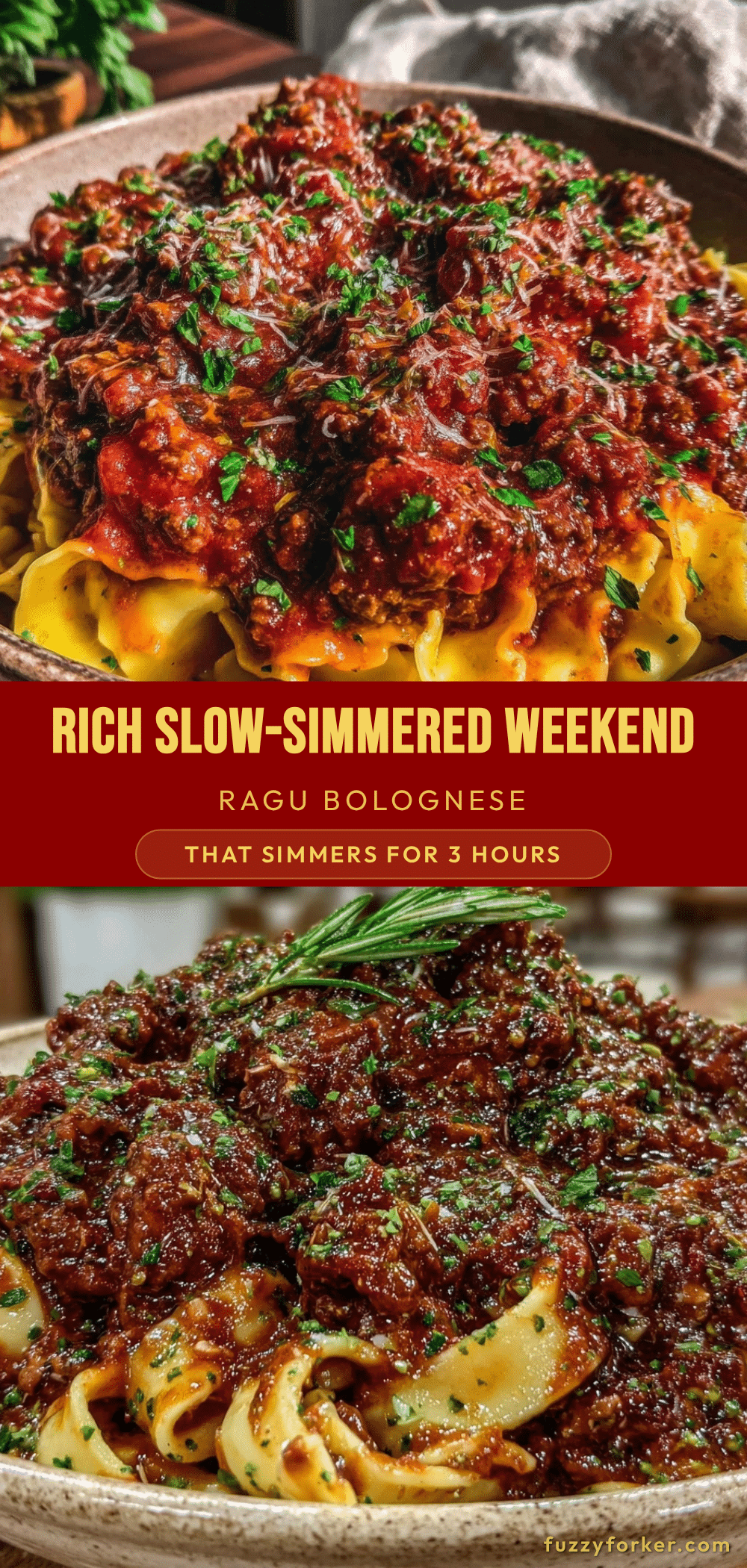
Classic Weekend Ragu Bolognese Recipe Easy Slow-Simmered Richness

A slow-simmered, rich and hearty ragu bolognese made with simple ingredients, perfect for weekend cooking and comforting family dinners.
- Prep Time: 15 minutes
- Cook Time: 2 hours 30 minutes
- Total Time: 2 hours 45 minutes
- Yield: 4 servings 1x
- Category: Main Course
- Cuisine: Italian
Ingredients
- 1 lb (450 g) ground beef (80/20 blend recommended)
- 1 cup finely diced carrots
- 1 cup finely diced celery stalks
- 1 cup finely chopped yellow onion
- 3 garlic cloves, minced
- 28 oz (800 g) canned whole peeled tomatoes, crushed by hand
- 2 tbsp tomato paste
- 1 cup (240 ml) dry white or red wine (or beef broth as substitute)
- 1/2 cup (120 ml) milk or heavy cream
- 2 tbsp olive oil
- 1 fresh thyme sprig
- 1 bay leaf
- Salt and freshly ground black pepper to taste
- Optional: Parmesan rind (remove before serving)
- Optional: Pinch of nutmeg
Instructions
- Heat 2 tablespoons of olive oil over medium heat in a Dutch oven.
- Add finely diced onions, carrots, and celery (about 1 cup each). Stir occasionally and cook for 8-10 minutes until softened and fragrant but not browned.
- Stir in 3 minced garlic cloves and cook for another 1-2 minutes until aromatic, avoiding burning the garlic.
- Increase heat to medium-high and add 1 pound (450 g) of ground beef. Break it up and cook until browned all over, about 6-8 minutes. Drain excess fat if needed, leaving a little for flavor.
- Pour in 1 cup (240 ml) of dry white or red wine, scraping the bottom of the pot to lift browned bits. Simmer for 3-4 minutes until slightly reduced.
- Stir in 2 tablespoons tomato paste and cook for 2 minutes to deepen flavor.
- Add crushed canned tomatoes and mix well.
- Toss in a fresh thyme sprig, 1 bay leaf, and parmesan rind if using. Season with salt, pepper, and a pinch of nutmeg if desired.
- Reduce heat to low and simmer gently, uncovered or partially covered, for 2 to 3 hours. Stir every 20-30 minutes to prevent sticking.
- About 15 minutes before serving, stir in 1/2 cup (120 ml) of milk or heavy cream. Remove thyme, bay leaf, and parmesan rind before serving.
- Taste and adjust seasoning with more salt, pepper, or a pinch of sugar if needed.
- Serve over your favorite pasta and top with freshly grated Parmesan and chopped parsley.
Notes
If sauce gets too thick, add a splash of broth or water during simmering to loosen it. Crush canned tomatoes by hand for rustic texture. Patience is key—slow simmering develops deep flavor. Brown meat in batches if needed to avoid overcrowding. Milk or cream added near the end softens acidity and adds silkiness. Wine adds complexity but can be substituted with beef broth plus vinegar if needed.
Nutrition
- Serving Size: 1 serving (approxima
- Calories: 450
- Sugar: 7
- Sodium: 550
- Fat: 28
- Saturated Fat: 10
- Carbohydrates: 12
- Fiber: 3
- Protein: 32
Keywords: ragu, bolognese, slow simmered sauce, classic Italian sauce, weekend cooking, comfort food, pasta sauce