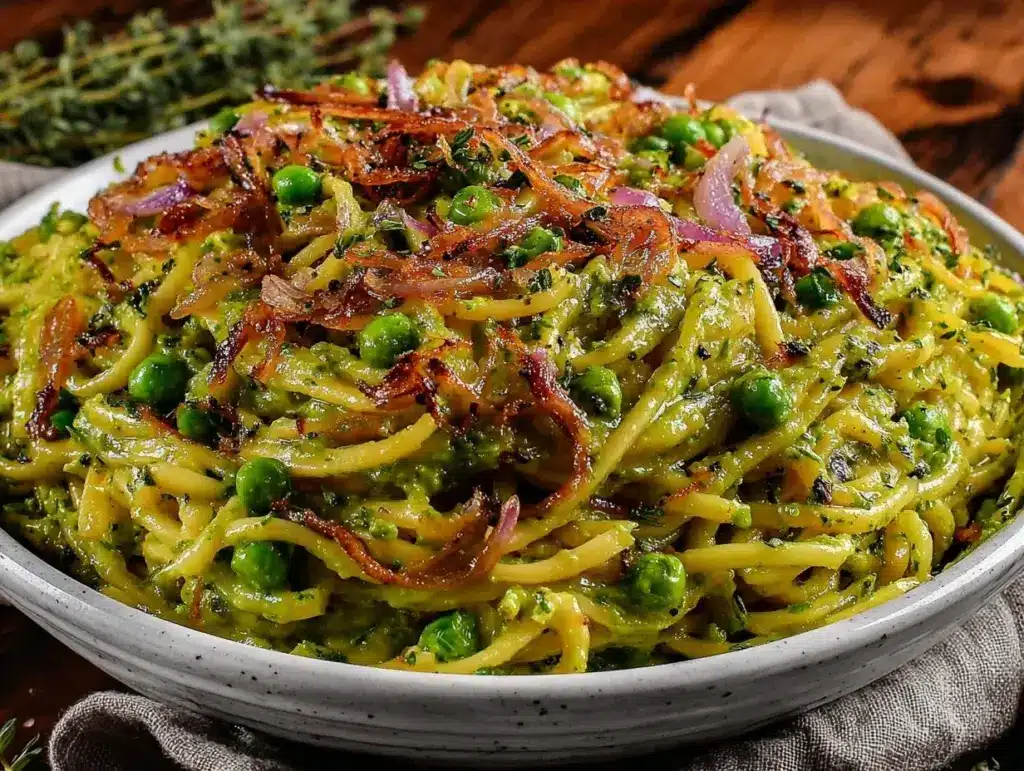
Let me tell you, the smell of fresh spring peas mingling with fragrant basil and garlic as it simmers on the stove is enough to make anyone’s mouth water. The first time I whipped up this creamy sticky spring pea pesto pasta, it was one of those rare kitchen moments where everything just clicks—the kind of moment where you pause, take a deep breath, and just smile because you know you’re onto something truly special. Years ago, when I was knee-high to a grasshopper, my grandma used to make a pea sauce for pasta, but this recipe takes that nostalgic comfort and kicks it up a notch with a luscious creaminess and the crunch of crispy shallots on top.
Honestly, my family couldn’t stop sneaking bites off the serving bowl before dinner even started (and I can’t really blame them). You know what? This creamy sticky spring pea pesto pasta isn’t just dinner—it’s a celebration of spring’s freshest flavors wrapped in a cozy, comforting hug. Perfect for brightening up a rainy weekend or impressing friends at a casual dinner, this recipe has quickly become a staple in my kitchen. I’ve tested it a few times in the name of research, of course, tweaking the texture and timing until it hit that perfect balance of sticky, creamy, and fresh. If you’re looking for an easy yet impressive dinner idea, you’re going to want to bookmark this one.
Why You’ll Love This Recipe
This creamy sticky spring pea pesto pasta recipe has seriously won me over, and here’s why you might fall for it too:
- Quick & Easy: Comes together in under 30 minutes, making it perfect for busy weeknights or last-minute cravings.
- Simple Ingredients: Uses everyday pantry staples and fresh spring peas—no need for fancy or hard-to-find items.
- Perfect for Spring & Summer: Bright, fresh flavors that scream sunshine and garden freshness. Ideal for potlucks or cozy dinners.
- Crowd-Pleaser: Loved by kids and adults alike, thanks to the creamy texture and that irresistible crispy shallot topping.
- Unbelievably Delicious: The sticky sauce clings to every strand of pasta, while the pesto adds a fresh punch and the crispy shallots bring a satisfying crunch.
What sets this recipe apart? Well, blending cottage cheese into the pesto makes it ultra-smooth and creamy without feeling heavy or greasy. Plus, the sticky sauce almost feels like a secret weapon—comfort food reimagined with freshness and flair. It’s the kind of dish where you close your eyes after the first bite and just savor the moment. Whether you want to impress guests or just treat yourself after a long day, this creamy sticky spring pea pesto pasta nails it every time.
What Ingredients You Will Need
This recipe uses simple, wholesome ingredients to deliver bold flavor and satisfying texture without the fuss. Many of these you probably already have on hand, and the fresh spring peas really make it shine—though frozen peas work well if you’re out of season.
- For the Pasta and Sauce:
- 8 oz (225 g) pasta of your choice (I love linguine or fettuccine for this)
- 1 cup fresh or frozen spring peas
- 1/2 cup cottage cheese (look for small-curd for best texture)
- 1/4 cup grated Parmesan cheese (plus extra for serving)
- 1/4 cup olive oil (extra virgin for flavor)
- 2 cloves garlic, minced (adds that punch)
- Salt and freshly ground black pepper, to taste
- 1 tablespoon lemon juice (freshly squeezed for brightness)
- For the Pesto:
- 1 cup fresh basil leaves, packed
- 1/4 cup pine nuts or walnuts (toasted for nutty depth)
- 1/4 cup grated Parmesan cheese
- 1/4 cup olive oil
- 1 small garlic clove
- Salt, to taste
- For the Crispy Shallots:
- 2 large shallots, thinly sliced
- 1/4 cup vegetable oil or olive oil (for frying)
- Pinch of salt
Pro tip: I like to use DeLallo pasta for its firm bite, but any good-quality brand will do. If you want a gluten-free version, swap to a gluten-free pasta and maybe reduce cooking time slightly. For dairy-free, try swapping cottage cheese and Parmesan with vegan cheese alternatives—though I warn you, the original combo is tough to beat.
Equipment Needed
- Large pot for boiling pasta
- Blender or food processor (to whip up that creamy pea pesto)
- Large skillet or frying pan (for crispy shallots and tossing pasta)
- Slotted spoon or spider strainer (to fish out crispy shallots easily)
- Mixing bowls (for combining sauce and pasta)
- Measuring cups and spoons
If you don’t have a food processor, a high-speed blender works fine—just scrape down the sides a few times. For frying shallots, I prefer a heavy-bottomed pan to keep the oil temperature steady, but a cast iron skillet does wonders too. If you’re tight on budget, any basic skillet and blender combo will get you through just fine. Just keep an eye on the shallots while frying—they burn quickly if you’re not careful!
Preparation Method
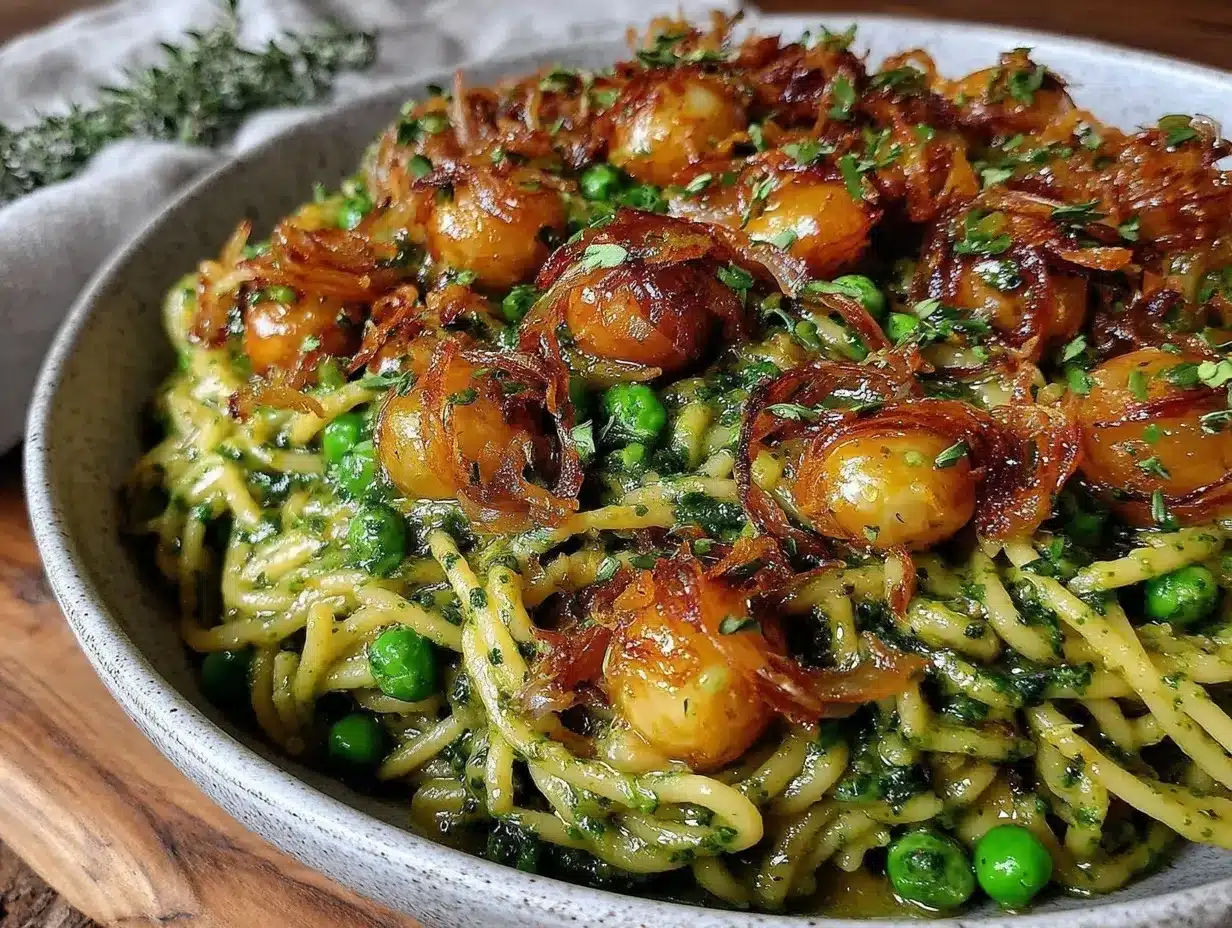
- Cook the Pasta: Bring a large pot of salted water to a boil. Add 8 oz (225 g) pasta and cook until al dente, about 8-10 minutes (check your package instructions). Reserve 1 cup of pasta water before draining. Drain pasta and set aside.
- Prepare Crispy Shallots: While pasta cooks, heat 1/4 cup vegetable oil in a skillet over medium heat. Add thinly sliced shallots and fry, stirring frequently, until golden and crispy, about 5-7 minutes. Use a slotted spoon to transfer shallots to a paper towel-lined plate and sprinkle with a pinch of salt.
- Make the Pea Pesto: In a blender or food processor, combine 1 cup spring peas, 1 cup basil leaves, 1/4 cup pine nuts, 1/4 cup Parmesan, 1 small garlic clove, and a pinch of salt. Pulse until coarsely blended.
- Add Liquids: With the motor running, slowly drizzle in 1/4 cup olive oil and 1/2 cup cottage cheese until the mixture is creamy and smooth. Stop and scrape down the sides as needed. Add 1 tablespoon lemon juice and pulse a few more times. The sauce should be thick, creamy, and vibrant green.
- Toss Pasta with Sauce: Return pasta to the pot or large mixing bowl. Pour pea pesto over pasta and toss gently to coat. Add reserved pasta water 1-2 tablespoons at a time to loosen the sauce until it clings to the pasta with a sticky, creamy texture.
- Season and Serve: Taste and adjust salt and pepper. Plate the pasta, then sprinkle generously with crispy shallots and extra Parmesan. Serve immediately while warm and fresh.
Quick tip: If the pesto seems too thick, add a splash more pasta water or olive oil to get that perfect saucy consistency. Also, don’t skip reserving pasta water—it’s pure magic for making the sauce stick beautifully.
Cooking Tips & Techniques
Let’s face it, creamy sticky pasta can sometimes turn into a gluey mess if you’re not careful. Here’s what I’ve learned after a few too many sticky situations:
- Don’t Overcook the Pasta: Al dente is your best friend here. The pasta should have a slight bite to hold the sauce better without turning mushy.
- Use Pasta Water Wisely: That starchy water is like liquid gold. Add it gradually—it helps the sauce stick without watering it down.
- Fry Shallots Low and Slow: Shallots burn fast, especially thin slices. Keep the heat medium or medium-low and stir often for that perfect crispy crunch.
- Blend Pesto Smooth but Not Soupy: You want creamy texture, not watery. If your cottage cheese is too watery, drain it slightly before blending.
- Timing is Everything: Fry shallots last so they stay crispy. Meanwhile, prep pesto and pasta so everything comes together hot and fresh.
Honestly, the first time I tried frying shallots, I got impatient and ended up with burnt bits. Lesson learned: patience pays off big time here. Also, multitasking helps—start frying shallots as pasta boils, then whip up the pesto while pasta drains. Saves time and keeps everything fresh.
Variations & Adaptations
This creamy sticky spring pea pesto pasta is super flexible—perfect for mixing things up depending on your mood or pantry.
- Vegan Variation: Swap cottage cheese and Parmesan for a blend of silken tofu and nutritional yeast. Use olive oil for frying shallots and check ingredients on your pasta for vegan compliance.
- Nut-Free: Skip pine nuts and use sunflower seeds or pumpkin seeds in the pesto instead. Adds a lovely earthiness without allergy worries.
- Seasonal Twist: In summer, replace spring peas with fresh green beans or sugar snap peas for a similar crunch and sweetness.
- Protein Boost: Add grilled chicken or crispy pancetta for a heartier meal. I’ve tossed in leftover roast chicken and it was a game changer.
- Gluten-Free: Use your favorite gluten-free pasta; just watch cooking time as it varies.
One personal favorite I tried was adding a handful of fresh mint leaves to the pesto. It gave the dish a refreshing lift that was unexpected but delightful. Feel free to experiment—you know your taste buds best!
Serving & Storage Suggestions
Serve this creamy sticky spring pea pesto pasta warm, ideally right after tossing with the sauce so it’s glossy and irresistible. A sprinkle of extra Parmesan and a few crispy shallots on top finish the look and texture perfectly.
Pair it with a light green salad or roasted cherry tomatoes for a simple, well-rounded meal. A crisp glass of white wine or sparkling water with lemon makes a lovely companion too.
If you have leftovers (though honestly, that’s rare!), store them in an airtight container in the fridge for up to 2 days. The sauce thickens as it chills; just reheat gently in a skillet with a splash of water or olive oil to loosen it back up. Crispy shallots are best served fresh, so if you have extra, keep them separate and add after reheating.
Flavors meld nicely after a few hours, making this pasta even tastier the next day—kind of like a little flavor party in your fridge. Just don’t let it sit too long or the peas lose their bright green charm!
Nutritional Information & Benefits
This dish packs a nutritious punch thanks to fresh spring peas, basil, and cottage cheese. Per serving (based on 4 servings), you’re looking at roughly:
| Nutrient | Amount |
|---|---|
| Calories | 400-450 kcal |
| Protein | 18-20 g |
| Carbohydrates | 50-55 g |
| Fat | 12-15 g (mostly healthy fats from olive oil and nuts) |
| Fiber | 6-8 g |
Spring peas are rich in vitamins A, C, and K, and the basil adds antioxidants. Cottage cheese boosts protein without heavy fat, making this a balanced, wholesome meal. It’s naturally gluten-free if you choose gluten-free pasta and can be adapted to fit vegan or nut-free diets.
Conclusion
This creamy sticky spring pea pesto pasta with crispy shallots is a recipe you’ll keep coming back to. It’s got the freshness of spring, the comfort of creamy pasta, and the crunch of golden shallots—honestly, what’s not to love? Feel free to tweak it to your taste or dietary needs; that’s the beauty of a simple, solid base recipe.
Personally, this dish reminds me of cozy family dinners and those little moments of joy when food just hits the spot. I hope you give it a try and make it your own. Don’t forget to leave a comment sharing your tweaks or how your family reacted—sharing food stories makes cooking even better!
Go ahead, give this creamy sticky spring pea pesto pasta a whirl—you might just find your next favorite dinner idea.
FAQs
Can I use frozen peas for this recipe?
Absolutely! Frozen peas work great if fresh aren’t available. Just thaw them before blending for the best texture and flavor.
How do I keep the shallots crispy when serving later?
Fry shallots just before serving and keep them separate from the pasta. Add them on top right before plating to maintain crunch.
Is this recipe suitable for vegans?
It can be! Swap cottage cheese and Parmesan for vegan alternatives like silken tofu and nutritional yeast. Use vegan-friendly pasta too.
What pasta shape works best with this sauce?
Long, flat pasta like linguine or fettuccine works wonderfully because the sticky sauce clings well, but feel free to use penne or fusilli for a fun twist.
Can I make this pesto ahead of time?
You can prepare the pesto a day in advance and store it in the fridge tightly covered. Just bring it to room temperature and stir before mixing with pasta.
Pin This Recipe!
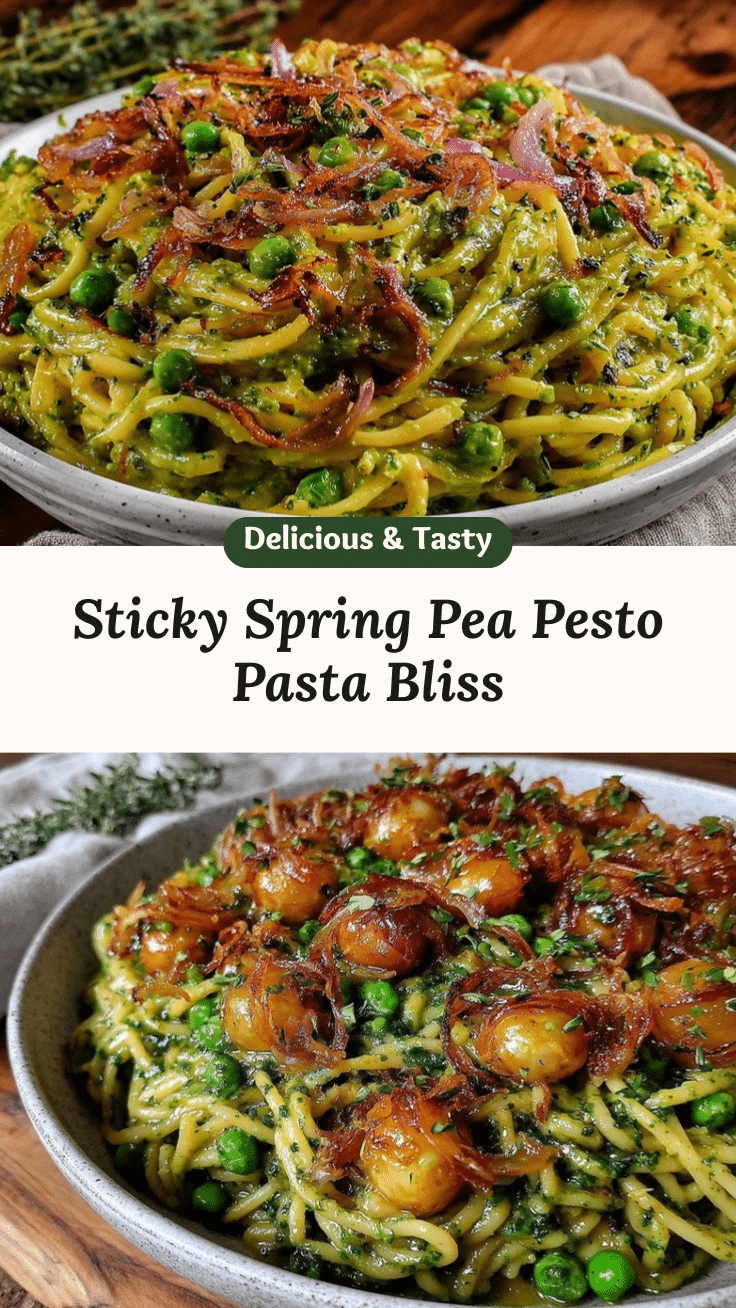
Creamy Sticky Spring Pea Pesto Pasta
A creamy, sticky pasta dish featuring fresh spring peas blended into a vibrant pesto with cottage cheese, topped with crispy shallots. Perfect for a quick, fresh, and comforting dinner.
- Prep Time: 10 minutes
- Cook Time: 15 minutes
- Total Time: 25 minutes
- Yield: 4 servings 1x
- Category: Main Course
- Cuisine: Italian
Ingredients
- 8 oz (225 g) pasta of your choice (linguine or fettuccine recommended)
- 1 cup fresh or frozen spring peas
- 1/2 cup cottage cheese (small-curd preferred)
- 1/4 cup grated Parmesan cheese (plus extra for serving)
- 1/4 cup extra virgin olive oil
- 2 cloves garlic, minced
- Salt and freshly ground black pepper, to taste
- 1 tablespoon freshly squeezed lemon juice
- 1 cup fresh basil leaves, packed
- 1/4 cup pine nuts or walnuts, toasted
- 1 small garlic clove
- 2 large shallots, thinly sliced
- 1/4 cup vegetable oil or olive oil (for frying)
- Pinch of salt (for shallots)
Instructions
- Bring a large pot of salted water to a boil. Add 8 oz (225 g) pasta and cook until al dente, about 8-10 minutes. Reserve 1 cup of pasta water before draining. Drain pasta and set aside.
- While pasta cooks, heat 1/4 cup vegetable oil in a skillet over medium heat. Add thinly sliced shallots and fry, stirring frequently, until golden and crispy, about 5-7 minutes. Use a slotted spoon to transfer shallots to a paper towel-lined plate and sprinkle with a pinch of salt.
- In a blender or food processor, combine 1 cup spring peas, 1 cup basil leaves, 1/4 cup pine nuts, 1/4 cup Parmesan, 1 small garlic clove, and a pinch of salt. Pulse until coarsely blended.
- With the motor running, slowly drizzle in 1/4 cup olive oil and 1/2 cup cottage cheese until the mixture is creamy and smooth. Stop and scrape down the sides as needed. Add 1 tablespoon lemon juice and pulse a few more times until sauce is thick, creamy, and vibrant green.
- Return pasta to the pot or a large mixing bowl. Pour pea pesto over pasta and toss gently to coat. Add reserved pasta water 1-2 tablespoons at a time to loosen the sauce until it clings to the pasta with a sticky, creamy texture.
- Taste and adjust salt and pepper. Plate the pasta, then sprinkle generously with crispy shallots and extra Parmesan. Serve immediately while warm and fresh.
Notes
Use small-curd cottage cheese for best texture. Reserve pasta water to adjust sauce consistency and help it cling to pasta. Fry shallots low and slow to avoid burning. If pesto is too thick, add more pasta water or olive oil. For gluten-free, use gluten-free pasta and adjust cooking time. For vegan, substitute cottage cheese and Parmesan with silken tofu and nutritional yeast.
Nutrition
- Serving Size: 1 serving (approxima
- Calories: 425
- Sugar: 5
- Sodium: 350
- Fat: 13.5
- Saturated Fat: 3.5
- Carbohydrates: 52.5
- Fiber: 7
- Protein: 19
Keywords: spring pea pesto pasta, creamy pasta, pesto pasta, spring peas, crispy shallots, easy dinner, vegetarian pasta, quick pasta recipe