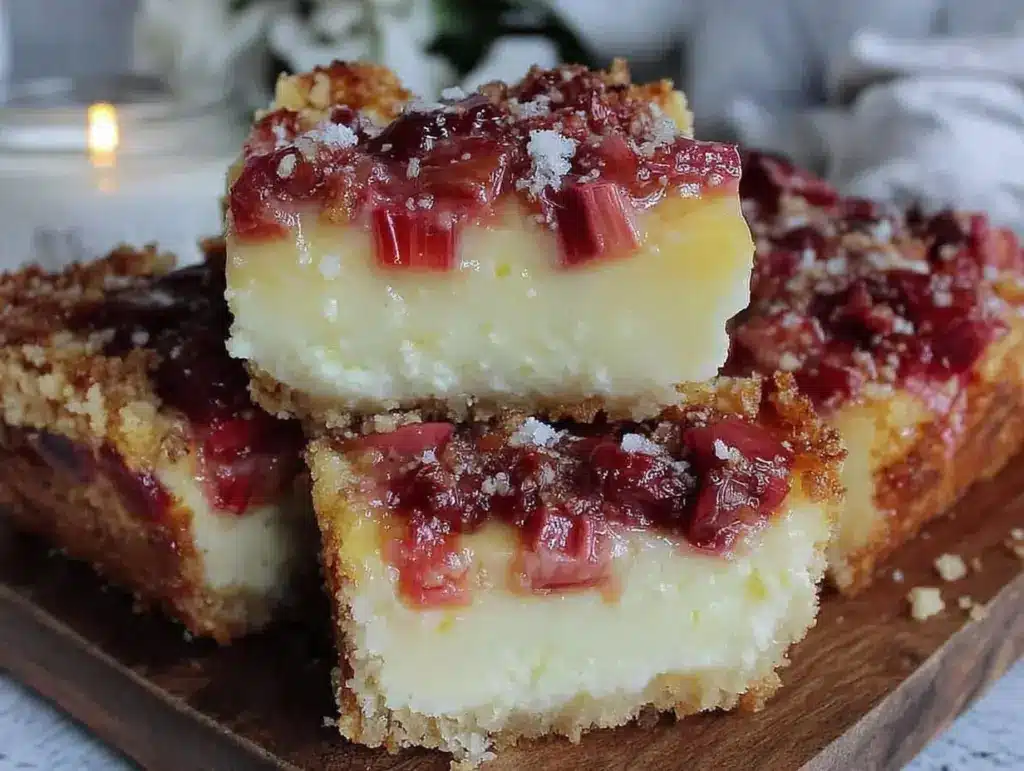
“The summer I turned thirty, I stumbled upon a dusty old recipe book at a flea market stall run by an elderly gentleman named Harold. Among the yellowed pages was a scribbled note for something called buttery rhubarb custard bars. I wasn’t expecting much—honestly, rhubarb had always felt a bit intimidating to me, all tart and fibrous. But that afternoon, I decided to give them a shot, despite being halfway through a chaotic kitchen experiment involving two cracked eggs and a missing measuring cup. The flaky golden crust came together like a dream, and the custard filling balanced the tang of rhubarb so perfectly that I caught myself sneaking a bite before it even cooled.
You know that feeling when a dessert transports you back to a warm kitchen with laughter and a hint of nostalgia? These bars do exactly that for me. Maybe you’ve been there—staring at a bunch of rhubarb wondering what to do with it, or craving something sweet but not too sweet. This recipe stuck with me because it’s approachable, forgiving, and downright delicious. Plus, that flaky crust? Let me tell you, it’s the kind of crust that makes you consider baking more often, even if it wasn’t on your weekend agenda.
So, if you’re curious about buttery rhubarb custard bars with a flaky golden crust that could charm even the pickiest dessert lovers, keep reading. I’ll share everything from ingredient secrets to personal tips that make this recipe a keeper in my kitchen (and hopefully yours too!).
Why You’ll Love This Recipe
Honestly, these buttery rhubarb custard bars have become my go-to dessert for a bunch of good reasons:
- Quick & Easy: You can whip these up in about 45 minutes, making them a perfect treat for busy weeknights or unexpected guests.
- Simple Ingredients: No need to hunt down exotic items—most of the ingredients are pantry staples or easy-to-find seasonal produce.
- Perfect for Spring and Summer: When rhubarb is at its peak, these bars shine bright at brunches, potlucks, or afternoon tea.
- Crowd-Pleaser: I’ve served these at family gatherings and honestly, they vanish faster than you can say “second helping.”
- Unbelievably Delicious: The flaky crust pairs beautifully with a creamy custard that’s just the right mix of sweet and tangy, making every bite memorable.
This isn’t just another rhubarb dessert floating around the internet. What sets it apart is the flaky golden crust, which uses a special butter-chilling step that I swear makes all the difference. Plus, the custard filling is gently sweetened and baked to silky perfection, so it complements the tart rhubarb without overpowering it. You’ll find yourself closing your eyes at that first bite, savoring the balance of textures and flavors.
Whether you’re a rhubarb fan or a cautious newcomer, these bars offer a comforting, satisfying dessert experience with a homemade touch that’s both impressive and approachable.
What Ingredients You Will Need
This recipe uses simple, wholesome ingredients to deliver bold flavor and satisfying texture without the fuss. Most are pantry basics, with fresh rhubarb bringing that signature tang.
- For the crust:
- All-purpose flour (2 cups / 250g) — I prefer King Arthur Flour for consistent texture
- Unsalted butter (1 cup / 225g), cold and cubed — using cold butter is key for that flaky crust
- Granulated sugar (1/4 cup / 50g) — adds a subtle sweetness
- Salt (1/4 teaspoon) — balances flavors
- Ice-cold water (3-4 tablespoons) — a little at a time to bring the dough together
- For the filling:
- Fresh rhubarb (3 cups / 375g), chopped into 1/2-inch pieces — look for firm stalks, avoid woody ends
- Granulated sugar (1/2 cup / 100g) — adjusts sweetness for the tart rhubarb
- Large eggs (3), room temperature — helps set the custard
- Whole milk (1 cup / 240ml) — adds creaminess
- Vanilla extract (1 teaspoon) — enhances flavor depth
- All-purpose flour (2 tablespoons / 16g) — thickens the custard slightly
- Salt (a pinch) — enhances overall taste
Pro tip: I sometimes swap half the granulated sugar in the filling with honey for a floral note. Also, if you’re avoiding dairy, full-fat coconut milk works surprisingly well here. Just remember, that changes the flavor subtly but deliciously.
Equipment Needed
- 9×13-inch (23×33 cm) baking pan — a standard size that works perfectly for these bars
- Mixing bowls — a large one for the crust and a medium one for the filling
- Pastry cutter or two forks — for cutting butter into the flour; a food processor can also do the trick if you have one
- Measuring cups and spoons — precise measurements matter for the crust’s texture
- Whisk — to beat the custard mixture smoothly
- Rubber spatula — for scraping down the bowl
- Cooling rack — to let the bars cool evenly after baking
If you don’t have a pastry cutter, your fingers work fine, but be quick to avoid warming the butter too much. For budget-friendly options, any sturdy glass or metal baking pan from your local store will do; I’ve used old reliable Pyrex pans for years and they hold heat beautifully, giving that golden crust.
Preparation Method
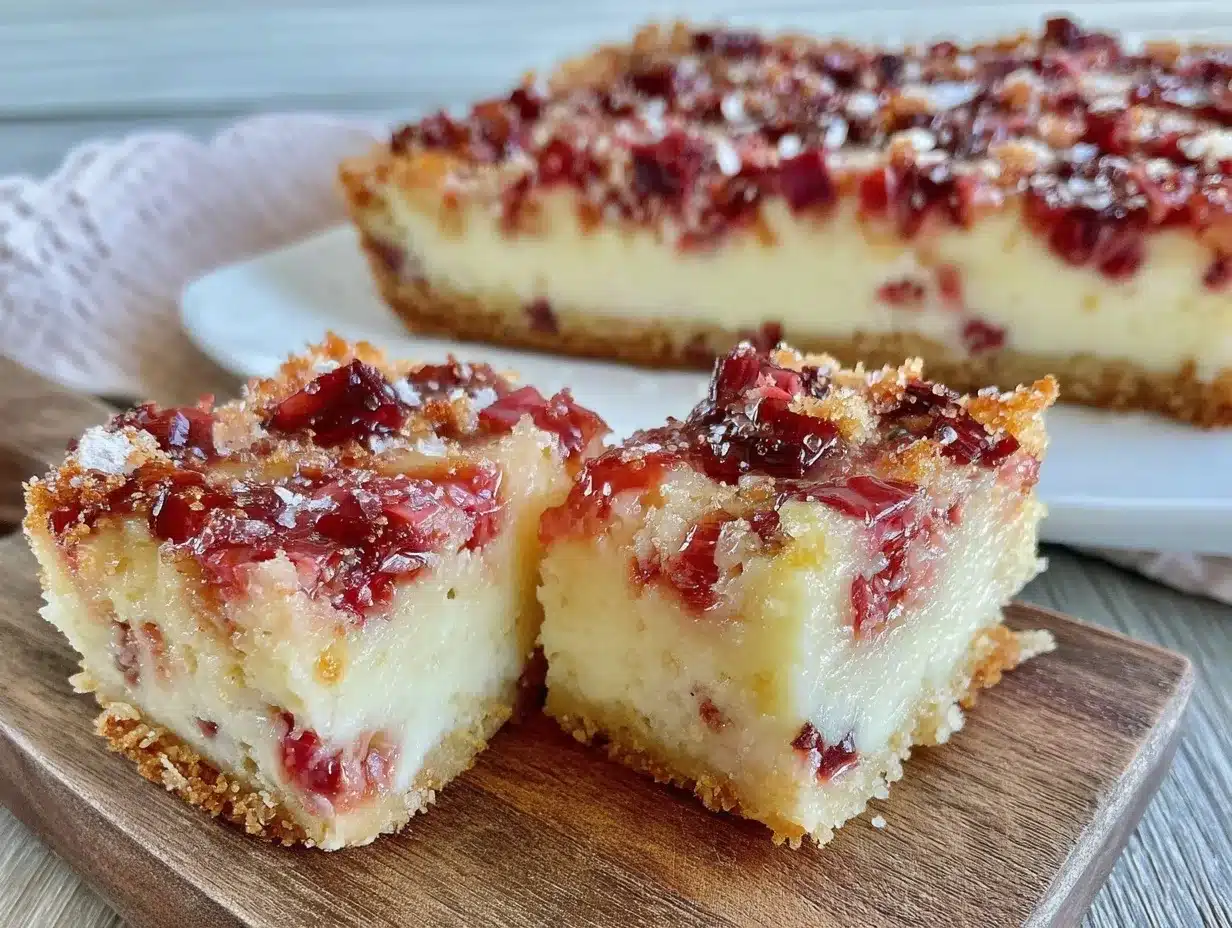
- Prepare the crust dough (about 15 minutes): In a large bowl, combine 2 cups (250g) flour, 1/4 cup (50g) sugar, and 1/4 teaspoon salt. Toss in the cold, cubed butter and use a pastry cutter or your fingertips to work it into the flour until the mixture resembles coarse crumbs with pea-sized bits. Add ice-cold water one tablespoon at a time, mixing gently until the dough just holds together. Don’t overwork it—flaky crust depends on keeping those cold butter pockets intact.
- Chill the dough (at least 30 minutes): Wrap the dough in plastic wrap and pop it in the fridge. This step is crucial! It firms up the butter and makes rolling easier. I usually get distracted here and start prepping the filling.
- Preheat your oven to 375°F (190°C). Grease your 9×13-inch pan lightly or line it with parchment paper for easy removal.
- Roll out the chilled dough: On a lightly floured surface, roll the dough into a rectangle slightly larger than your pan. Transfer it carefully into the pan, pressing it evenly across the bottom and slightly up the sides. Prick the crust a few times with a fork to prevent bubbling during baking.
- Blind bake the crust for 15 minutes: This initial bake helps maintain the crust’s flakiness under the custard. You’ll know it’s ready when the edges turn a soft golden color.
- Prepare the filling while the crust bakes (about 10 minutes): In a medium bowl, whisk together 3 large eggs, 1/2 cup (100g) sugar, 1 cup (240ml) whole milk, 1 teaspoon vanilla extract, 2 tablespoons (16g) flour, and a pinch of salt until smooth. Fold in the chopped rhubarb gently.
- Pour the filling over the partially baked crust: Spread it evenly but don’t worry if the rhubarb sinks—it’ll bake beautifully.
- Bake for an additional 35-40 minutes at 375°F (190°C): The custard should be set but still slightly jiggly in the center when you gently shake the pan. The top will have a delicate golden hue.
- Cool completely on a wire rack: This can take at least 1 hour. Patience here pays off—the bars slice better and flavors meld as they rest.
- Slice and serve: Use a sharp knife cleaned between cuts for neat squares. These bars keep well refrigerated and actually taste better the next day!
Quick tip: If you notice the crust bubbling too much during blind baking, gently press it down with a spatula or use a piece of parchment paper with pie weights or dried beans on top.
Cooking Tips & Techniques
When it comes to buttery rhubarb custard bars, a few tricks make a big difference in the final result. First, always keep your butter cold when making the crust. Warm butter will lead to a tough, dense base rather than that flaky, golden crust you want. I’ve learned this the hard way after a rushed afternoon where my butter melted too quickly on the counter.
Second, don’t skip the chilling step! It might feel like an extra wait, but chilling the dough firms up the butter, which creates those lovely flaky layers. If you’re in a hurry, pop it in the freezer for 15 minutes instead, but keep an eye on it so it doesn’t freeze solid.
For the custard, beating the eggs and sugar until smooth ensures a silky texture. Adding a bit of flour helps the filling set without turning rubbery. I remember once I forgot the flour and ended up with a custard that was too wobbly and runny—lesson learned.
Timing matters too. The initial blind bake keeps the crust from getting soggy under the moist filling. And when baking the filled bars, look for a slight jiggle in the center—that’s your cue they’re perfectly set but not overbaked.
Finally, cooling is critical. Cutting into warm bars can cause the custard to spill. Let them rest until fully cooled, or even better, chill them overnight for cleaner cuts and enhanced flavors.
Variations & Adaptations
These buttery rhubarb custard bars are quite versatile, and I’ve played around with a few versions that you might enjoy:
- Berry Rhubarb Bars: Swap half the rhubarb for fresh strawberries or raspberries in season. The sweetness balances the tartness beautifully.
- Gluten-Free Twist: Use a gluten-free all-purpose flour blend for the crust. I recommend one with xanthan gum included to keep that flaky texture intact.
- Dairy-Free Option: Replace butter with coconut oil (solid and cold) for the crust, and use coconut milk instead of whole milk in the filling. The flavor changes slightly but remains delicious.
- Spiced Custard: Add a pinch of ground cinnamon or cardamom to the custard mixture for a warm, aromatic note.
One personal favorite is adding a sprinkle of toasted almond slices on top before baking for extra crunch and nuttiness. It’s a subtle upgrade but totally worth trying!
Serving & Storage Suggestions
Serve these rhubarb custard bars at room temperature or slightly chilled—both ways bring out the best in their creamy texture. They pair wonderfully with a dollop of whipped cream or a scoop of vanilla ice cream if you’re feeling indulgent.
For beverages, a cup of lightly brewed green tea or a crisp white wine complements the tartness nicely, balancing the buttery richness.
Store any leftovers in an airtight container in the refrigerator for up to 4 days. The flavors actually meld over time, so sometimes I find they taste even better the next day. To reheat, briefly warm them in a low oven (around 300°F / 150°C) for 5-7 minutes to revive that flaky crust without melting the custard.
These bars also freeze well—wrap individual pieces tightly and freeze for up to 2 months. Thaw overnight in the fridge before serving.
Nutritional Information & Benefits
Each serving of buttery rhubarb custard bars contains approximately:
| Calories | 280 |
|---|---|
| Total Fat | 15g |
| Carbohydrates | 30g |
| Protein | 5g |
| Fiber | 2g |
| Sugar | 18g |
Rhubarb is a great source of vitamin K and contains antioxidants that support overall health. Using whole milk in the custard provides calcium and vitamin D, while the eggs add protein and important nutrients like choline. If you’re watching carbs or sugar, you can reduce the sugar slightly or swap with natural sweeteners like monk fruit; just keep in mind it affects the texture slightly.
From a wellness perspective, this dessert offers a balanced treat—rich and satisfying without being overly heavy. Plus, baking from scratch lets you control the ingredients, avoiding preservatives and additives common in store-bought sweets.
Conclusion
If you’ve been searching for a dessert that combines tangy rhubarb, creamy custard, and a flaky buttery crust, you’ve just found your new favorite. This recipe is approachable enough for a weekday treat yet impressive enough for guests, making it a versatile staple in my baking repertoire.
Don’t hesitate to tweak it to suit your tastes—maybe try the berry variation or a dairy-free twist. Baking, after all, should be fun and personal. I love these bars because they remind me of that unexpected recipe discovery from Harold’s flea market stall and the cozy afternoons that followed.
Give it a try, and I’d love to hear how your buttery rhubarb custard bars turn out! Feel free to share your adaptations or any questions in the comments below. Happy baking!
FAQs
Can I use frozen rhubarb for these bars?
Yes, frozen rhubarb works well. Just thaw and drain any excess liquid before adding it to the filling to avoid a watery custard.
How do I store leftover bars?
Store them in an airtight container in the refrigerator for up to 4 days. They can also be frozen for up to 2 months—just thaw overnight in the fridge before serving.
Can I make the crust ahead of time?
Absolutely! The crust dough can be made and chilled for up to 2 days before baking. Just wrap it tightly in plastic wrap and keep it refrigerated.
What if my crust isn’t flaky?
Most likely, the butter warmed too much during mixing or rolling. Next time, work quickly with cold butter and chill the dough well before baking.
Is there a vegan version of this recipe?
You can try substituting vegan butter and a plant-based milk like coconut milk, and use an egg replacer like flax eggs. The texture will differ slightly but still be tasty!
Pin This Recipe!
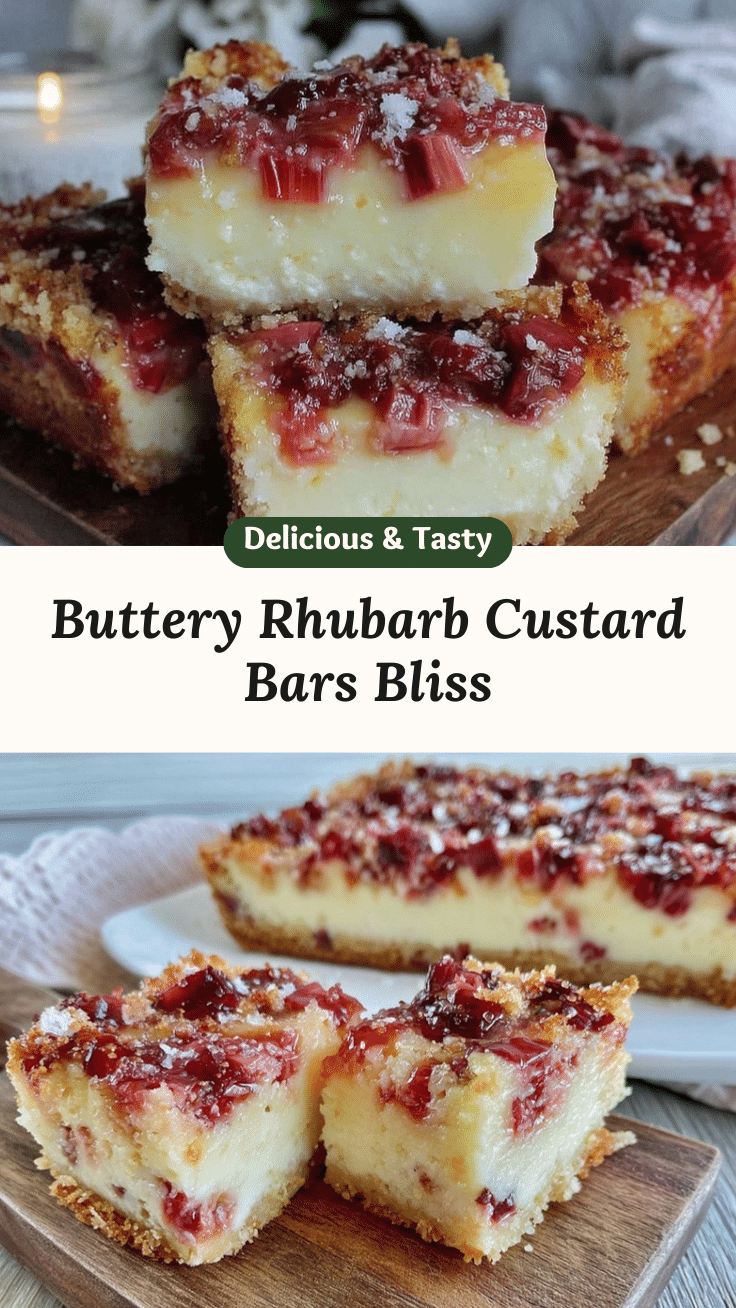
Buttery Rhubarb Custard Bars
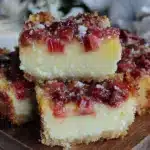
These buttery rhubarb custard bars feature a flaky golden crust paired with a creamy, tangy custard filling, making a perfect spring or summer dessert that’s quick and easy to prepare.
- Prep Time: 15 minutes
- Cook Time: 50-55 minutes
- Total Time: 1 hour 10 minutes plus chilling and cooling time
- Yield: 12 servings 1x
- Category: Dessert
- Cuisine: American
Ingredients
- 2 cups (250g) all-purpose flour
- 1 cup (225g) unsalted butter, cold and cubed
- 1/4 cup (50g) granulated sugar
- 1/4 teaspoon salt
- 3–4 tablespoons ice-cold water
- 3 cups (375g) fresh rhubarb, chopped into 1/2-inch pieces
- 1/2 cup (100g) granulated sugar
- 3 large eggs, room temperature
- 1 cup (240ml) whole milk
- 1 teaspoon vanilla extract
- 2 tablespoons (16g) all-purpose flour
- Pinch of salt
Instructions
- In a large bowl, combine 2 cups flour, 1/4 cup sugar, and 1/4 teaspoon salt. Add cold, cubed butter and cut into the flour using a pastry cutter or fingertips until mixture resembles coarse crumbs with pea-sized bits.
- Add ice-cold water one tablespoon at a time, mixing gently until dough just holds together. Do not overwork.
- Wrap dough in plastic wrap and chill in the refrigerator for at least 30 minutes.
- Preheat oven to 375°F (190°C). Lightly grease a 9×13-inch baking pan or line with parchment paper.
- Roll out chilled dough on a lightly floured surface into a rectangle slightly larger than the pan. Transfer to pan, pressing evenly across bottom and slightly up sides. Prick crust with a fork to prevent bubbling.
- Blind bake crust for 15 minutes until edges turn soft golden.
- While crust bakes, whisk together eggs, 1/2 cup sugar, milk, vanilla extract, 2 tablespoons flour, and a pinch of salt until smooth. Fold in chopped rhubarb gently.
- Pour filling over partially baked crust and spread evenly.
- Bake for an additional 35-40 minutes at 375°F (190°C) until custard is set but slightly jiggly in the center and top is delicately golden.
- Cool completely on a wire rack for at least 1 hour before slicing.
- Slice into bars using a sharp knife cleaned between cuts. Serve at room temperature or slightly chilled.
Notes
Keep butter cold to ensure a flaky crust. Chill dough for at least 30 minutes before rolling. Blind bake crust to prevent sogginess. Look for a slight jiggle in custard center to avoid overbaking. Cool bars completely before slicing for clean cuts. Bars taste better the next day and can be refrigerated up to 4 days or frozen up to 2 months.
Nutrition
- Serving Size: 1 bar (1/12th of rec
- Calories: 280
- Sugar: 18
- Fat: 15
- Carbohydrates: 30
- Fiber: 2
- Protein: 5
Keywords: rhubarb custard bars, buttery crust, flaky crust, rhubarb dessert, spring dessert, summer dessert, easy dessert, homemade bars