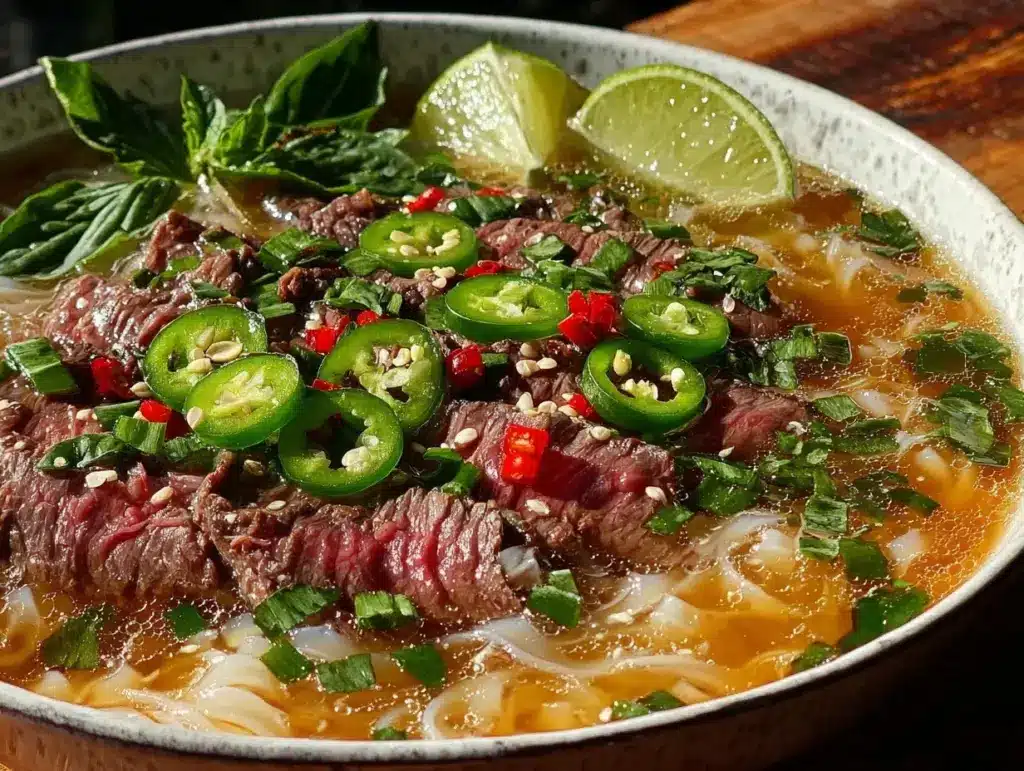
“You’ve got to try the pho I made last night,” my friend texted me out of the blue, and honestly, I wasn’t expecting much. Vietnamese beef pho isn’t exactly what I’d toss in my “quick dinner” category. But curiosity got the better of me, and the very next evening, I found myself simmering a pot of broth that smelled like a fragrant memory more than a hurried meal. Pho, that aromatic Vietnamese noodle soup, with its deep, savory beef broth and fresh herbs, isn’t just food—it’s an experience.
Making flavorful homemade beef pho with fresh herb garnish turned out to be this oddly satisfying kitchen adventure where patience met payoff. I wasn’t exactly a pro at balancing spices or coaxing richness from bones, but the process itself grounded me, took the edge off the day, and, well, the results were worth every simmering minute. There’s just something about that first spoonful—the warmth, the layers of flavor, the freshness from the herbs—that makes you pause, close your eyes, and savor.
It stuck with me because it’s not just about cooking a meal, but about the ritual of gathering ingredients, slow-cooking the broth, and topping it all off with a handful of herbs that brighten every bite. This recipe became my go-to for cozy nights, and I’m sharing it here because I want you to feel that same quiet satisfaction—without the stress.
Why You’ll Love This Recipe
- Rich, Authentic Flavor: This recipe pulls together traditional spices like star anise and cinnamon for a broth that’s deeply aromatic and complex, yet perfectly balanced.
- Fresh Herb Garnish: The bright, crisp freshness of basil, cilantro, and mint on top adds just the right zing to every bowl.
- Hands-On Yet Straightforward: While it simmers gently, you can prep other parts or even relax—the slow cook builds flavor without constant babysitting.
- Customizable Protein: You can swap beef cuts or add thinly sliced raw beef for that silky texture that cooks right in the hot broth.
- Comfort Food for Any Season: Whether it’s chilly outside or you just want something soothing, this pho hits the spot.
- Impress Without Stress: Friends and family will ask for the recipe, but trust me, it’s not as intimidating as it seems.
Unlike other pho recipes that might feel complicated or require exotic ingredients, this one uses accessible pantry staples and fresh herbs you can easily find at your local market. The broth’s slow-simmering technique is the secret to a flavor that feels both traditional and homemade. Honestly, it’s the kind of dish that makes you want to curl up with a bowl and forget the world for a while.
What Ingredients You Will Need
This beef pho recipe uses simple, wholesome ingredients to deliver bold flavors and a satisfying texture without fuss. Most are pantry staples or fresh herbs you can find year-round. Here’s the breakdown:
- For the Broth:
- Beef bones (marrow and knuckle bones work best, about 3-4 pounds / 1.4-1.8 kg) – the base of your broth
- Beef brisket or chuck roast (1 pound / 450 g), optional for extra meat
- Onion (1 large, halved and charred for deep flavor)
- Ginger (3-inch piece, sliced and charred)
- Star anise (4 whole pieces)
- Cinnamon sticks (2 large sticks)
- Cloves (5 whole cloves)
- Cardamom pods (2 pods)
- Rock sugar or white sugar (1 tablespoon) – balances the savory
- Fish sauce (1/4 cup / 60 ml) – for that essential umami kick
- Salt, to taste
- For the Noodles and Toppings:
- Rice noodles (pho-style flat rice noodles, about 8 ounces / 225 g)
- Raw beef sirloin or eye of round, thinly sliced (1/2 pound / 225 g)
- Bean sprouts (1 cup, rinsed)
- Fresh herbs: Thai basil, cilantro, and mint (a small bunch each)
- Green onions (2, thinly sliced)
- Lime wedges (for squeezing)
- Thinly sliced jalapeños or Thai chilies (optional, for heat)
- Hoisin sauce and Sriracha (for drizzling)
I usually pick up fresh herbs from my local Asian market; the Thai basil there has such a punchier flavor than the grocery store kind. For rice noodles, I trust brands like Banh Pho Sai Gon for their authentic texture. If you want a gluten-free option, rice noodles are naturally gluten-free, so you’re covered there. For the broth, if you can’t find rock sugar, regular white sugar works just fine, but that subtle sweetness really rounds out the broth.
Equipment Needed
- Large stockpot (at least 6 quarts / 5.7 liters) – essential for simmering the broth
- Charcoal or gas burner (optional) – for charring onion and ginger; alternatively, use a broiler or stovetop grill pan
- Fine mesh strainer or cheesecloth – to strain the broth and remove spices and solids
- Large bowl – for soaking rice noodles
- Sharp knife and cutting board – for prepping meat and herbs
- Soup ladle and bowls – for serving
Personally, I find that a heavy-bottomed stockpot helps prevent scorching during the long simmer. If you don’t have a broiler for charring the onion and ginger, just roast them in a hot pan—the smoky aroma really lifts the broth’s flavor. For straining, I use a fine mesh strainer lined with cheesecloth to catch every tiny fragment, making the broth crystal clear. Budget-wise, you can get a decent stockpot for under $30, which is a worthy investment if you enjoy slow-cooked soups or stews.
Preparation Method
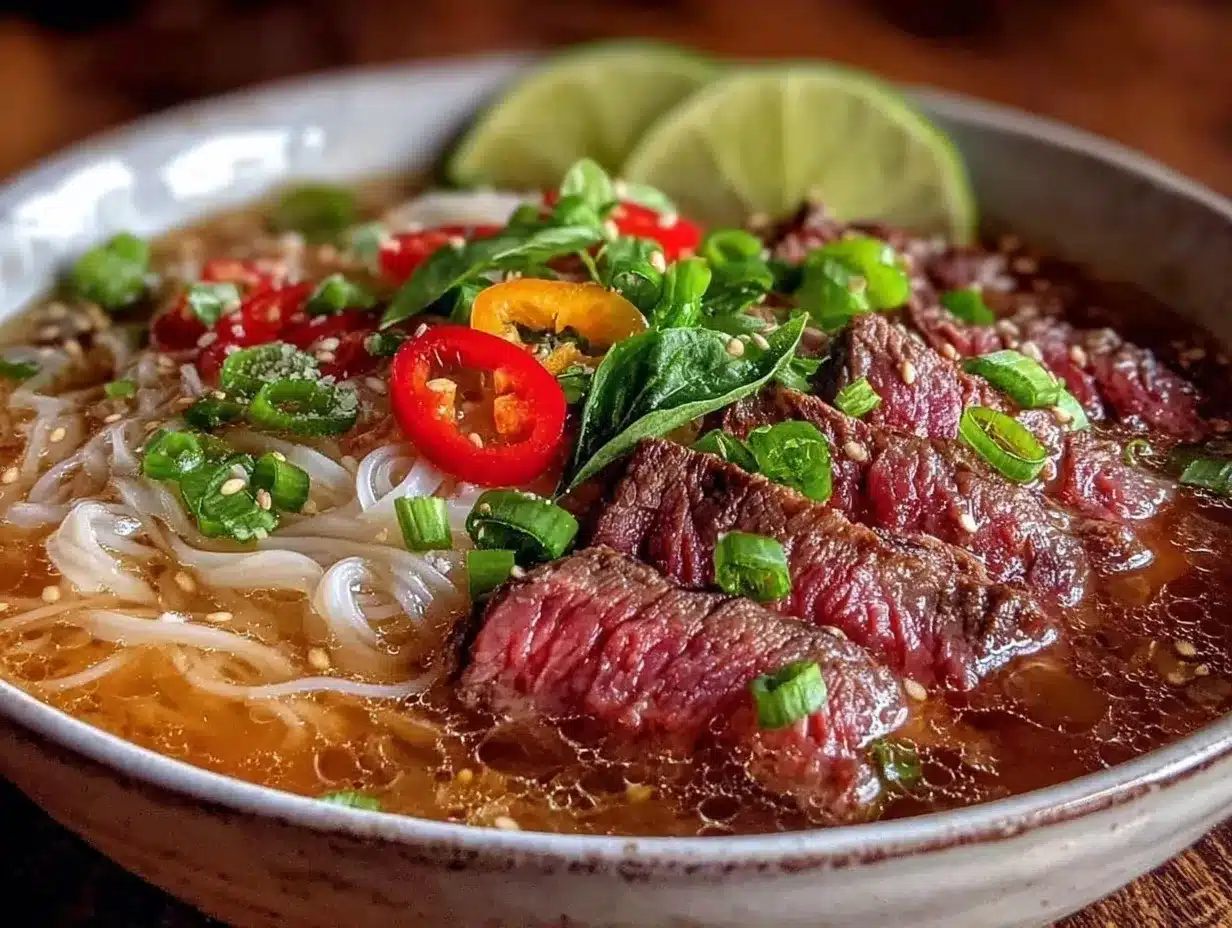
- Prepare the bones and broth base (15 minutes prep, 3 hours simmer): Start by blanching the beef bones in boiling water for 10 minutes to remove impurities. Drain and rinse the bones thoroughly. This step is key for a clean, clear broth.
- Char the aromatics (10 minutes): Using a broiler or a gas flame, char the halved onion and sliced ginger until blackened in spots. This adds smoky depth to the broth.
- Toast the spices (5 minutes): In a dry skillet over medium heat, lightly toast star anise, cinnamon sticks, cloves, and cardamom until fragrant. Be careful not to burn them.
- Simmer the broth (3-4 hours): In a large stockpot, add the blanched bones, charred onion and ginger, toasted spices, and 4 quarts (3.8 liters) of water. Bring to a boil, then reduce to a gentle simmer. Skim off any scum every 20-30 minutes. After 3 hours, add fish sauce, rock sugar, and salt. Continue simmering for another 30 minutes to meld flavors.
- Cook the brisket (optional, during last hour): If using brisket, add it to the broth during the last hour of simmering. Once tender, remove and slice thinly.
- Prepare the noodles (15 minutes): Soak rice noodles in warm water until pliable, then drain. Just before serving, briefly blanch them in boiling water for 10-15 seconds to heat through and soften.
- Assemble the bowls (10 minutes): Place cooked noodles in each bowl. Arrange slices of cooked brisket and raw beef on top. Ladle hot broth over the top, which will gently cook the raw beef.
- Add fresh garnishes: Top with bean sprouts, fresh Thai basil, cilantro, mint, green onions, and jalapeños. Serve with lime wedges, hoisin, and Sriracha on the side.
Tip: Skimming the broth regularly during simmering keeps it from turning cloudy, which makes the final dish look and taste cleaner. And don’t rush the charring step—it’s small but mighty for flavor depth. When slicing raw beef thinly, freezing it for 30 minutes beforehand makes it easier to cut paper-thin.
Cooking Tips & Techniques
One of the trickiest parts of homemade pho is getting the broth just right. I learned the hard way that boiling too hard or neglecting to skim the foam can result in a cloudy, greasy broth. Keep the simmer gentle, and be patient with skimming—your broth will thank you.
Char the onion and ginger until you see blackened spots but not completely burnt. This smoky flavor layer is what brings that authentic pho aroma. Toasting the spices in a dry pan wakes them up, releasing essential oils that infuse the broth beautifully.
When cooking rice noodles, avoid overcooking. They should stay slightly firm because they’ll soften further once in the hot broth. Also, slice the raw beef thin enough so it cooks instantly when the broth is poured over—this keeps it tender and silky.
Timing your garnish prep while the broth simmers is a great way to multitask without stress. I often soak noodles and chop herbs during the simmer, so assembly is quick and fresh. Another tip: store your herbs wrapped loosely in a damp paper towel inside a plastic bag to keep them vibrant longer.
Variations & Adaptations
- Vegetarian Pho: Swap beef bones with a mix of charred onion, ginger, dried shiitake mushrooms, and vegetable broth. Use tofu or seitan instead of beef for protein.
- Spicy Pho: Add sliced fresh chilies directly into the broth or serve with extra Sriracha and chili oil for those who like a kick.
- Low-Carb Pho: Replace rice noodles with spiralized zucchini or shirataki noodles for a lighter option that still soaks up that amazing broth.
- Seafood Pho: Use shrimp, scallops, or fish fillets instead of beef, adding them to the hot broth just before serving to cook gently.
- Herb Twist: I once tried swapping Thai basil with lemon balm and holy basil for a more herbal, citrusy note—a surprising but delightful change!
For oven roasting the aromatics instead of charring over a flame, 400°F (205°C) for 20 minutes works well. Also, if you want to speed up broth time, a pressure cooker can reduce simmering to about an hour without losing depth.
Serving & Storage Suggestions
Serve your beef pho steaming hot with fresh lime wedges and sauces on the side so everyone can customize. The bowl looks inviting when garnished generously with fresh herbs and crunchy bean sprouts.
For a complete meal, pair it with simple spring rolls or a light salad like cucumber avocado salad for a fresh contrast. A hot jasmine tea or a crisp lager complements the broth’s richness nicely.
Leftover broth stores beautifully in the fridge for up to 4 days or freezes well for up to 3 months. Reheat gently on the stove to avoid boiling off flavors. Noodles should be stored separately to prevent them from getting mushy.
Flavors deepen after a day or two, making pho fantastic for meal prep. Just refresh the herbs and add fresh lime before serving. I often make a big batch of broth on the weekend, saving time for busy weeknights.
Nutritional Information & Benefits
This homemade beef pho is not only delicious but nourishing. The broth is packed with collagen and minerals extracted from slow-simmered bones, which some find supportive for joint and skin health.
Rice noodles provide a gluten-free carbohydrate source, making this dish suitable for gluten-sensitive diets. The fresh herbs add antioxidants and vitamins, while lean beef delivers a healthy protein boost.
Fish sauce adds umami without excess sodium if used moderately. Plus, the warming spices like cinnamon and star anise have traditional digestive benefits, making pho a comforting choice that’s also easier on the stomach.
For those watching calories, this recipe is relatively light, especially if you skip the hoisin and reduce noodles. It’s a balanced meal that feels indulgent without heaviness.
Conclusion
Making flavorful homemade beef pho with fresh herb garnish is a rewarding project that brings a little warmth and calm to your kitchen. It’s a recipe I come back to because it’s flexible, satisfying, and frankly, pretty fun to make. Whether you’re cooking for yourself on a quiet night or serving guests something impressive yet approachable, this pho delivers taste and comfort.
Don’t hesitate to tweak the herbs, spice level, or protein to suit your mood. This recipe gives you a solid foundation and plenty of room to make it your own. I love how it transforms simple ingredients into something soulful, and I hope you’ll feel the same.
When you try it, I’d love to hear how your pho turns out or any customizations you made. Sharing those moments is what makes cooking feel like a community, one bowl at a time.
FAQs About Flavorful Homemade Beef Pho
How long should I simmer beef bones for pho broth?
Simmering for 3 to 4 hours is ideal to extract deep flavor and collagen. You can simmer longer for richer broth, but 3 hours is a good balance for home cooks.
Can I use pre-made beef broth instead of bones?
While pre-made broth can work in a pinch, it won’t have the same depth or richness as homemade simmered bones. For best results, cook your own broth.
What kind of noodles are best for pho?
Flat rice noodles specifically labeled as pho noodles are best for texture and authenticity. They cook quickly and soak up the broth nicely.
How do I cook raw beef slices safely in pho?
Slice the beef very thin (almost paper-thin) and add it to the hot broth just before serving. The heat will gently cook the meat quickly without making it tough.
Can I freeze leftover pho broth?
Yes, broth freezes well for up to 3 months. Store it in airtight containers and thaw overnight in the fridge before reheating gently on the stove.
Making pho at home might seem daunting at first, but with these steps and tips, you’ll be serving bowls of fragrant, flavorful comfort that bring everyone back for seconds. For more easy-to-make crowd-pleasers with fresh herbs, you might enjoy my creamy deviled eggs with fresh herbs or the Italian marinated olives recipe—both perfect companions to a pho night.
Pin This Recipe!
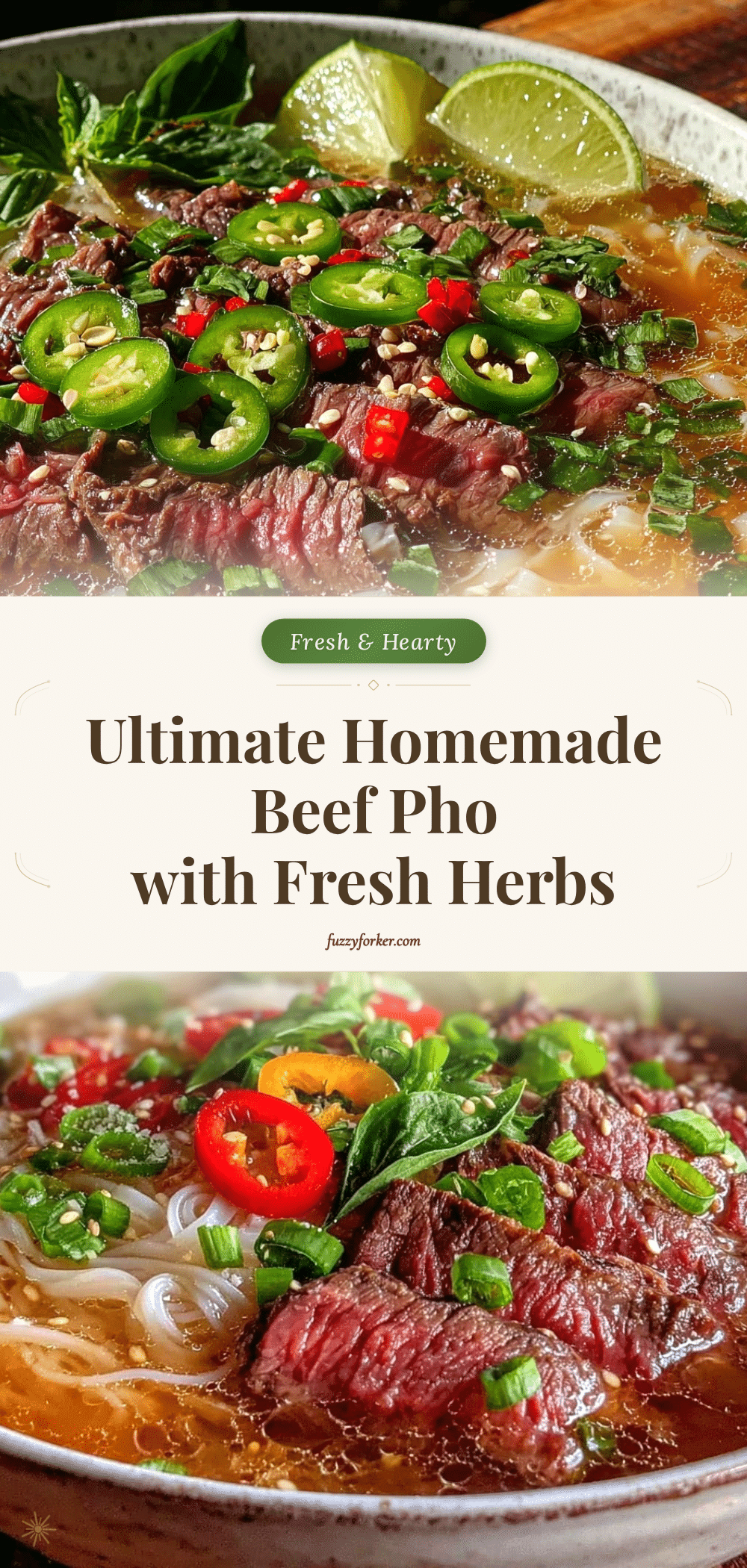
Beef Pho Recipe Easy Homemade Flavorful Pho with Fresh Herb Garnish
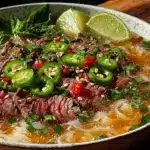
A flavorful homemade Vietnamese beef pho with a rich, aromatic broth and fresh herb garnish, perfect for cozy nights and customizable to your taste.
- Prep Time: 40 minutes
- Cook Time: 3 hours 30 minutes
- Total Time: 4 hours 10 minutes
- Yield: 6 servings 1x
- Category: Main Course
- Cuisine: Vietnamese
Ingredients
- 3–4 pounds beef bones (marrow and knuckle bones)
- 1 pound beef brisket or chuck roast (optional)
- 1 large onion, halved and charred
- 3-inch piece ginger, sliced and charred
- 4 whole star anise
- 2 large cinnamon sticks
- 5 whole cloves
- 2 cardamom pods
- 1 tablespoon rock sugar or white sugar
- 1/4 cup fish sauce (60 ml)
- Salt, to taste
- 8 ounces pho-style flat rice noodles
- 1/2 pound raw beef sirloin or eye of round, thinly sliced
- 1 cup bean sprouts, rinsed
- Small bunch each of Thai basil, cilantro, and mint
- 2 green onions, thinly sliced
- Lime wedges, for squeezing
- Thinly sliced jalapeños or Thai chilies (optional)
- Hoisin sauce and Sriracha, for drizzling
Instructions
- Blanch beef bones in boiling water for 10 minutes to remove impurities. Drain and rinse thoroughly.
- Char the halved onion and sliced ginger using a broiler or gas flame until blackened in spots.
- Toast star anise, cinnamon sticks, cloves, and cardamom in a dry skillet over medium heat until fragrant.
- In a large stockpot, add blanched bones, charred onion and ginger, toasted spices, and 4 quarts (3.8 liters) of water. Bring to a boil, then reduce to a gentle simmer. Skim off scum every 20-30 minutes.
- After 3 hours, add fish sauce, rock sugar, and salt. Continue simmering for another 30 minutes.
- If using brisket, add it during the last hour of simmering. Once tender, remove and slice thinly.
- Soak rice noodles in warm water until pliable, then drain. Just before serving, blanch noodles in boiling water for 10-15 seconds.
- Place cooked noodles in bowls. Arrange slices of cooked brisket and raw beef on top. Ladle hot broth over to gently cook the raw beef.
- Top with bean sprouts, Thai basil, cilantro, mint, green onions, and jalapeños. Serve with lime wedges, hoisin sauce, and Sriracha on the side.
Notes
Skim the broth regularly during simmering to keep it clear. Freeze raw beef for 30 minutes before slicing thinly for easier cutting. Avoid overcooking rice noodles; they should remain slightly firm before serving. Store herbs wrapped in damp paper towels inside a plastic bag to keep fresh longer. Broth can be frozen for up to 3 months and stored in the fridge for up to 4 days.
Nutrition
- Serving Size: 1 bowl (approximatel
- Calories: 350
- Sugar: 3
- Sodium: 850
- Fat: 10
- Saturated Fat: 3
- Carbohydrates: 35
- Fiber: 2
- Protein: 25
Keywords: beef pho, Vietnamese pho, homemade pho, beef noodle soup, pho recipe, fresh herbs, slow simmer broth