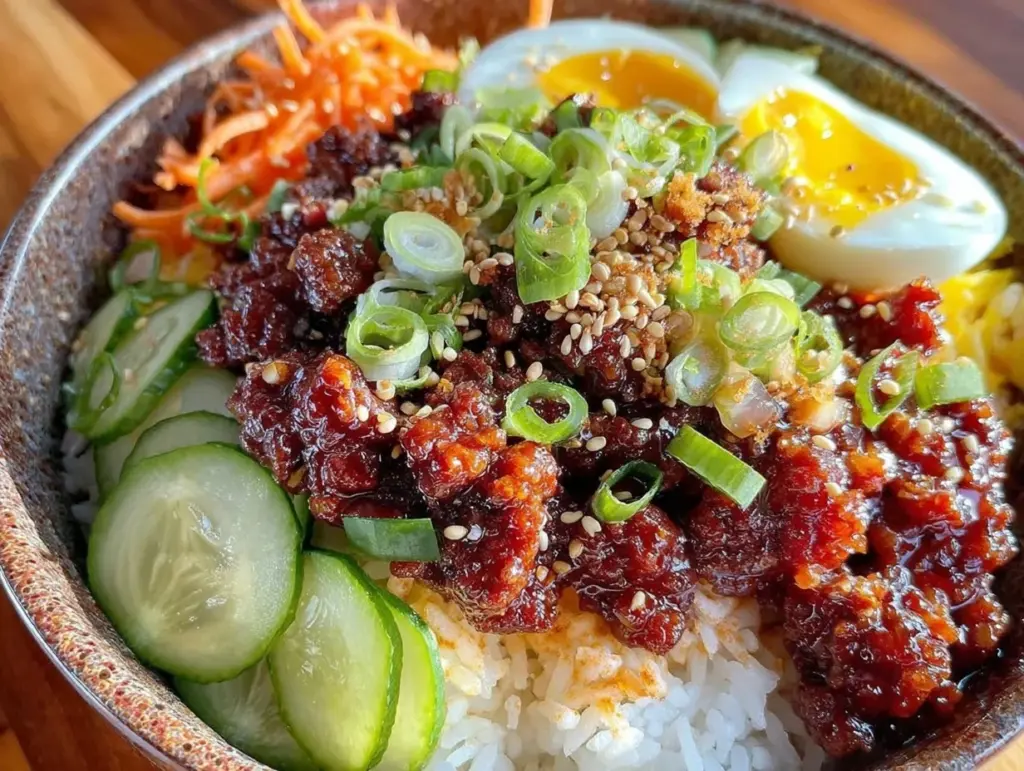
“Are you sure this isn’t spicy?” my roommate asked, eyeing the bright red sauce bubbling gently in the pan. Honestly, I wasn’t sure either. It was a random Tuesday night, and all I had was some ground beef, a half-empty jar of gochujang, and a vague craving for something bold but quick. I threw together what would become my go-to Quick Korean Beef Bowl with Spicy Gochujang Sauce. The first bite hit with a punch of umami and heat that caught me off guard, but in the best way possible.
That night, I didn’t plan to make something fancy—just something fast to quiet the rumbling stomach after a long day. The sweet-spicy kick from the sauce paired with tender beef and fluffy rice felt like a comforting reset button. Since then, I’ve made it several times in a week, tweaking the heat level here, adding a quick pickle there. It’s funny how recipes born from a bit of kitchen chaos often turn into favorites you trust without question.
What sticks with me is how this recipe hits that sweet spot between approachable and exciting. It doesn’t demand a pantry overhaul or hours of prep. Instead, it delivers bold flavors with minimal fuss, perfect for those late nights when you want something tasty but can’t be bothered with anything complicated. So if you’re hunting for a quick Korean beef bowl recipe with a spicy gochujang sauce that feels homemade and full of personality, you’re in the right place.
Just a heads-up: this dish has become my quiet little secret for impressing friends who drop by unexpectedly, right alongside some of my favorite easy appetizers like the creamy deviled eggs with fresh herbs. It’s the kind of meal that’s both fuss-free and satisfying — exactly what you want from a busy weeknight dinner.
Why You’ll Love This Quick Korean Beef Bowl with Spicy Gochujang Sauce
Having cooked this recipe multiple times, I can honestly say it’s one of those dishes that surprises you with its simplicity and flavor. The spicy gochujang sauce adds just the right amount of heat without overwhelming the palate, while the beef stays tender and juicy. Here’s why this recipe stands out in my kitchen:
- Quick & Easy: Comes together in about 20 minutes, which is a lifesaver on hectic evenings.
- Simple Ingredients: No exotic groceries needed—most of these ingredients are pantry staples or easy to find in any supermarket.
- Perfect for Weeknight Dinners: Whether you’re cooking for one or feeding a couple of hungry friends, this bowl fills the gap between fast food and homemade comfort.
- Crowd-Pleaser: The balance of savory, sweet, and spicy flavors always gets nods of approval—kids and adults alike.
- Unbelievably Delicious: The texture contrast between the silky sauce, chewy beef, and crisp toppings makes every bite exciting.
What makes this recipe different? I’ve found that blending the gochujang with a touch of honey and soy sauce creates a perfectly balanced sauce that’s spicy but not intimidating. Plus, cooking the beef quickly over high heat locks in juiciness without drying it out. It’s a simple trick but makes all the difference.
Honestly, this bowl feels like comfort food reimagined — fast, flavorful, and flexible enough to suit whatever mood you’re in. If you’re looking for an easy dinner that tastes like you spent way more time on it, this Quick Korean Beef Bowl with Spicy Gochujang Sauce is your answer.
What Ingredients You Will Need
This recipe uses straightforward, wholesome ingredients to bring out bold Korean flavors without stress or rare finds. Most of these you probably already have on hand or can grab quickly during your next grocery run.
- Ground beef: 1 pound (450 g), preferably 80/20 for a juicy, flavorful result.
- Gochujang (Korean chili paste): 2 tablespoons, the star of the sauce—adds heat and umami.
- Soy sauce: 3 tablespoons, for that salty depth; I recommend Kikkoman for consistency.
- Honey: 1 tablespoon, to balance the spice with a touch of sweetness.
- Garlic: 3 cloves, minced, for aromatic punch.
- Ginger: 1 teaspoon, freshly grated, adds warmth and complexity.
- Sesame oil: 1 teaspoon, toasted if possible, for that nutty finish.
- Green onions: 2 stalks, thinly sliced, for freshness and crunch.
- Cooked white rice: 4 cups (about 800 g), ideally day-old rice for better texture.
- Sesame seeds: 1 tablespoon, toasted, optional but highly recommended for garnish.
- Vegetables (optional): Thinly sliced cucumber, shredded carrots, or steamed broccoli add color and crunch.
If you want to swap the ground beef for ground turkey or chicken, go right ahead—it’s a great way to lighten the dish. For a gluten-free version, just use tamari instead of traditional soy sauce.
Equipment Needed
- Large skillet or frying pan: A nonstick or cast iron skillet works best for cooking the beef evenly.
- Mixing bowls: For whisking the sauce and prepping ingredients.
- Measuring spoons and cups: To keep the sauce balanced.
- Sharp knife and cutting board: Essential for mincing garlic, ginger, and slicing green onions.
- Rice cooker or pot: For cooking the rice; leftover rice works well if you’re short on time.
If you don’t have a skillet, a wok or sauté pan can substitute nicely. For cleaning, I find seasoning my cast iron skillet regularly keeps it almost nonstick and easy to handle. Budget-friendly tip: a simple silicone spatula helps you scrape every last bit of sauce from the pan.
Preparation Method
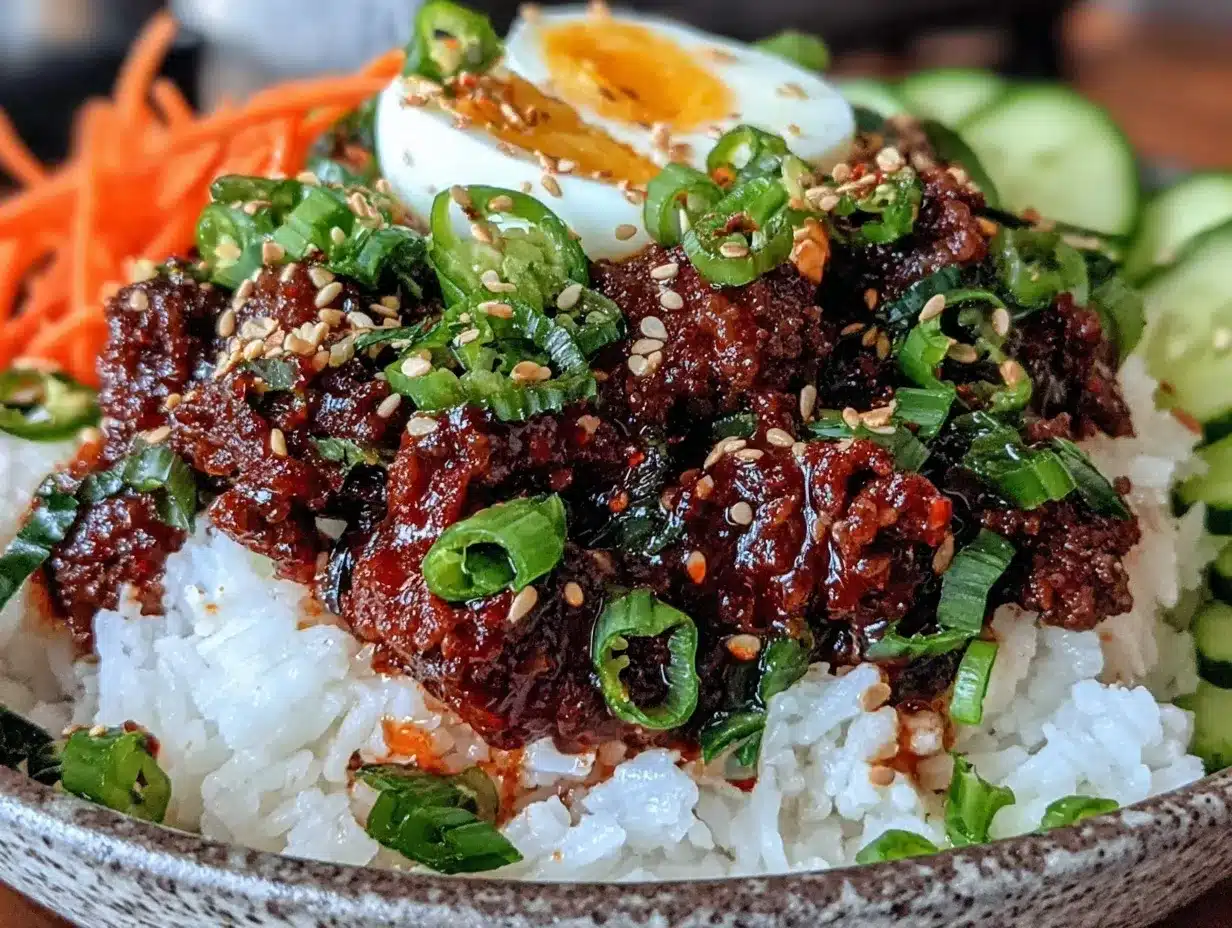
- Prepare the sauce: In a small bowl, whisk together 2 tablespoons gochujang, 3 tablespoons soy sauce, 1 tablespoon honey, 1 teaspoon toasted sesame oil, minced garlic, and grated ginger. Set aside. (About 5 minutes)
- Heat the skillet: Place your skillet over medium-high heat and add a splash of neutral oil (canola or vegetable). Once shimmering, add the ground beef. Break it up with a spatula and cook until browned and cooked through, about 6-8 minutes. (Look for no pink bits and a slightly crispy edge for texture.)
- Drain excess fat: If your beef releases a lot of grease, carefully drain it off, leaving a little for flavor.
- Add the sauce: Pour the gochujang mixture over the beef. Stir well to coat evenly. Reduce heat to medium and let it simmer for 2-3 minutes until sauce thickens and clings to the meat. (You’ll know it’s ready when the sauce looks glossy and slightly sticky.)
- Prepare rice and toppings: While the beef simmers, fluff your cooked rice and chop green onions and optional veggies. If using vegetables like broccoli, steam or blanch them quickly to keep vibrant color and crunch. (5 minutes prep)
- Assemble the bowls: Spoon warm rice into bowls, top generously with the spicy beef mixture. Garnish with sliced green onions and toasted sesame seeds. Add fresh veggies on the side or mix them in for extra texture.
- Final touch: Give a quick drizzle of extra sesame oil or a squeeze of lime for brightness if you like. Serve immediately.
Pro tip: Using day-old rice helps keep the bowl from getting mushy, but freshly cooked rice works fine if you’re careful to keep it fluffy. If the sauce gets too thick, splash a little water or broth to loosen it up. And don’t rush the browning step—it’s where the magic flavors develop.
Cooking Tips & Techniques
One key to a winning Korean beef bowl is balancing the sauce’s heat and sweetness. I learned the hard way (a few too-spicy batches) to always add honey gradually and taste as you go. Gochujang is potent, so start with less if you’re sensitive to spice.
High heat searing for the beef locks in juices and creates those delicious browned bits—don’t stir too often, let it sit for a minute or two before breaking it up. And if you want an extra layer of flavor, try adding a splash of rice vinegar or a pinch of brown sugar to tweak the sauce.
Timing is everything: start your rice or prep veggies first, so everything comes together without awkward waiting. Multitasking here saves you from the dreaded “everything’s ready except the rice” scenario.
Lastly, always taste before serving. The balance of sweet, salty, and spicy can shift based on your gochujang brand or even the size of your garlic cloves. Trust your palate—it’s the best kitchen tool.
Variations & Adaptations
- Vegetarian: Swap ground beef for crumbled firm tofu or cooked lentils. The sauce stays the same and works beautifully.
- Low-carb: Replace rice with cauliflower rice or serve over steamed greens for a lighter bowl.
- Extra heat: Add sliced fresh chili peppers or a dash of Korean chili flakes (gochugaru) to the sauce.
- Different protein: Ground chicken, turkey, or even thinly sliced steak strips adapt well to the sauce and cook quickly.
- Seasonal veggies: In spring or summer, add shredded cabbage or snap peas for crunch. Fall calls for roasted sweet potatoes or mushrooms.
Once, I swapped in ground pork and added a squeeze of fresh lime and chopped cilantro for a little twist that surprised my guests in a good way. Feel free to experiment with your favorite flavors!
Serving & Storage Suggestions
This Korean beef bowl is best served hot, straight from the pan onto the rice for the freshest experience. The contrast between the warm sauce and tender beef with the fluffy rice is what really sells it.
If you plan to serve it later, let the components cool separately before storing. Keep the beef mixture and rice in airtight containers in the fridge for up to 3 days. Reheat gently on the stove or in the microwave, adding a splash of water if the sauce thickens too much.
For a quick lunch the next day, this bowl tastes great cold or at room temperature, especially if you added crisp veggies or pickled cucumber slices. Over time, the flavors meld and deepen, so leftovers are honestly a treat.
Pair your bowl with something light and fresh like a cucumber salad or a crisp Asian-style slaw. For a little extra fun, I sometimes serve it alongside simple starters like the creamy classic hummus with olive oil and paprika to balance the heat.
Nutritional Information & Benefits
This Quick Korean Beef Bowl with Spicy Gochujang Sauce packs protein from the ground beef, and the fermented gochujang adds probiotics and antioxidants. The garlic and ginger bring anti-inflammatory benefits, plus a boost of flavor without calories.
Approximate nutrition per serving (makes 4 servings):
| Calories | 420 |
|---|---|
| Protein | 28g |
| Fat | 22g |
| Carbohydrates | 28g |
| Fiber | 2g |
For gluten-free eaters, swap soy sauce for tamari or coconut aminos. The recipe is naturally low in sugar (aside from the small honey addition) and can be made dairy-free, making it accessible for many diets.
From a wellness perspective, this dish satisfies cravings without overloading on processed ingredients or artificial flavors. You get a filling meal with a little kick, perfect for balancing comfort and health.
Conclusion
The Quick Korean Beef Bowl with Spicy Gochujang Sauce has become my late-night hero and a reliable crowd-pleaser. It blends bold Korean flavors with simple, accessible ingredients and minimal effort. Whether you’re rushing home after work or entertaining a last-minute guest, this bowl delivers that satisfying, spicy comfort you want without the fuss.
Feel free to customize it to your taste—more heat, different veggies, or a protein swap. The recipe is forgiving and flexible, so it’s easy to make it your own.
I love this dish because it proves that quick food can still be exciting and soulful, not just a grab-and-go convenience. If you try it, I’d love to hear how you made it your own!
And if you enjoy bold, easy recipes like this, you might appreciate my crispy chicken katsu curry bowl for another speedy Asian-inspired dinner.
FAQs about Quick Korean Beef Bowl with Spicy Gochujang Sauce
How spicy is this Korean beef bowl?
The dish has a moderate heat level thanks to the gochujang. You can adjust the spice by using less chili paste or adding more honey to balance it out.
Can I make this recipe ahead of time?
Yes! Prepare the beef mixture and rice separately, refrigerate, and reheat before serving. It keeps well for up to 3 days.
What can I serve with this beef bowl?
It pairs well with steamed or pickled vegetables, simple salads, or lighter appetizers like the Italian marinated olives.
Is there a vegetarian version of this dish?
Definitely! Use crumbled tofu, tempeh, or cooked lentils instead of beef, and keep the sauce the same for that signature flavor.
What type of rice works best?
Short-grain white rice or jasmine rice works great. Day-old rice is preferred to avoid mushiness, but freshly cooked rice is fine if fluffed well.
Pin This Recipe!
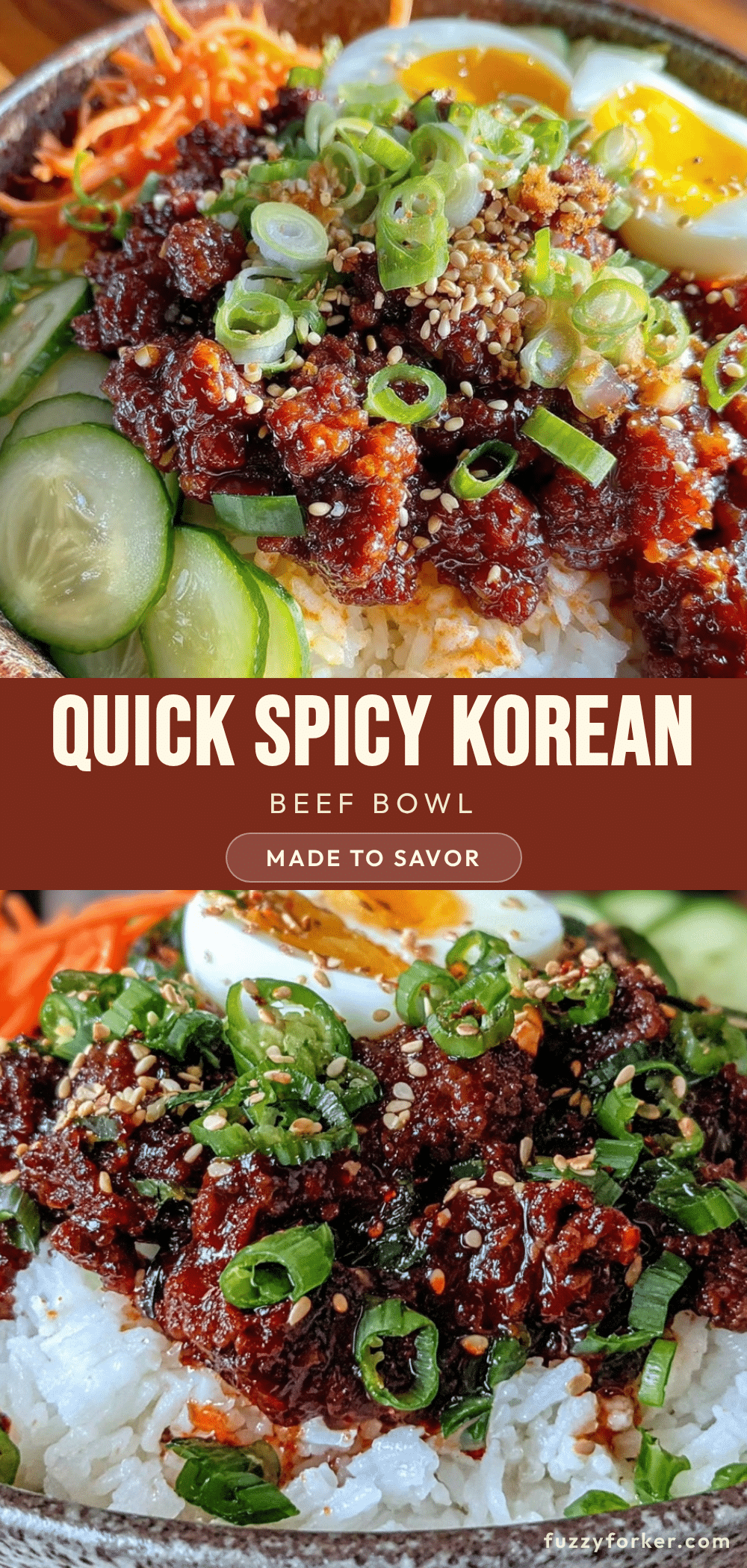
Quick Korean Beef Bowl Recipe with Spicy Gochujang Sauce
A fast and flavorful Korean beef bowl featuring a spicy gochujang sauce, tender ground beef, and fluffy rice. Perfect for quick weeknight dinners with bold, balanced flavors.
- Prep Time: 10 minutes
- Cook Time: 10 minutes
- Total Time: 20 minutes
- Yield: 4 servings 1x
- Category: Main Course
- Cuisine: Korean
Ingredients
- 1 pound ground beef (80/20 preferred)
- 2 tablespoons gochujang (Korean chili paste)
- 3 tablespoons soy sauce (Kikkoman recommended)
- 1 tablespoon honey
- 3 cloves garlic, minced
- 1 teaspoon freshly grated ginger
- 1 teaspoon toasted sesame oil
- 2 stalks green onions, thinly sliced
- 4 cups cooked white rice (about 800 g), preferably day-old
- 1 tablespoon toasted sesame seeds (optional)
- Optional vegetables: thinly sliced cucumber, shredded carrots, or steamed broccoli
Instructions
- Prepare the sauce: In a small bowl, whisk together 2 tablespoons gochujang, 3 tablespoons soy sauce, 1 tablespoon honey, 1 teaspoon toasted sesame oil, minced garlic, and grated ginger. Set aside.
- Heat the skillet over medium-high heat and add a splash of neutral oil (canola or vegetable). Once shimmering, add the ground beef. Break it up with a spatula and cook until browned and cooked through, about 6-8 minutes.
- Drain excess fat if necessary, leaving a little for flavor.
- Pour the gochujang sauce mixture over the beef. Stir well to coat evenly. Reduce heat to medium and let simmer for 2-3 minutes until the sauce thickens and clings to the meat.
- While the beef simmers, fluff the cooked rice and chop green onions and optional vegetables. Steam or blanch vegetables like broccoli if using.
- Assemble the bowls by spooning warm rice into bowls, topping generously with the spicy beef mixture. Garnish with sliced green onions and toasted sesame seeds. Add fresh veggies on the side or mix them in.
- Optionally, drizzle extra sesame oil or squeeze lime juice over the bowl for brightness. Serve immediately.
Notes
Use day-old rice to prevent mushiness. Adjust gochujang and honey to control spice level. Browning beef well locks in juiciness and flavor. If sauce thickens too much, add a splash of water or broth to loosen. Can substitute ground turkey, chicken, or tofu for variations.
Nutrition
- Serving Size: 1 bowl (approximatel
- Calories: 420
- Fat: 22
- Carbohydrates: 28
- Fiber: 2
- Protein: 28
Keywords: Korean beef bowl, gochujang sauce, quick dinner, spicy beef, weeknight meal, easy Korean recipe